Quick answer
- Infrared sauna: 10 to 15 minutes is a comfortable first round. Once it's familiar, many people do 15 to 20.
- Cold plunge: 30 seconds is a real first plunge. With practice, 1 to 3 minutes is common.
- Get out early if you feel dizzy, sick or can't slow your breathing. Leaving early is always allowed.
- Build up slowly: a minute or two more in the heat, or 15 to 30 seconds more in the cold, one change at a time.
In this article · 6 sections
How long should you stay in the sauna and the cold plunge? Shorter than you think the first time, and a little longer once you know how your body handles each one. A comfortable first round in an infrared sauna is often 10 to 15 minutes. A real first cold plunge is 30 seconds.
Below are the ranges people commonly use, what the research used, the signs it's time to get out, and how to build up without overdoing it. Planning a whole visit instead? Our guide to how long contrast therapy should last walks through full 25, 55 and 85-minute sessions.
How long to stay in an infrared sauna
Infrared heat builds gently. You feel warm on your skin first, then warm all the way through, and somewhere in there you start to sweat. Because it creeps up on you, it's easy to stay longer than you meant to.
Your first few visits
Aim for 10 to 15 minutes in your first round. Sit back, breathe through your nose and keep an eye on the time. If you go back in for a second round, make it a little shorter than the first.
Once it's familiar
Many people settle into 15 to 20 minutes a round, two or three rounds a session. Want more time in the heat? Add a round rather than stretching one past about 20 minutes. Breaking it up keeps it comfortable.
What the research used
Most sauna research uses traditional Finnish saunas, which run hotter than infrared, so read these as context rather than targets:
- In a Finnish study that followed 2,315 men for about 20 years, sessions longer than 19 minutes were linked to a lower risk of sudden cardiac death than sessions under 11 minutes. It's an observational link, not proof (JAMA Internal Medicine, 2015).
- In 102 adults with heart risk factors, a single 30-minute sauna at about 163°F lowered blood pressure right afterward (Journal of Human Hypertension, 2018).
- A milder infrared sauna, 95 to 122°F for 30 minutes after training, was very light on the body and comfortable, its researchers reported (SpringerPlus, 2015).
Heat is real work, too: a 25-minute session in a very hot sauna asked about as much of the heart as moderate exercise (Complementary Therapies in Medicine, 2019). That's a good reason to build up gradually.
What changes your number
A short night, a hard workout, an empty stomach, too little water or a hot afternoon can all make the same heat feel stronger. On days like that, go shorter. If you're sick or running a fever, skip the heat and come back when you're well.
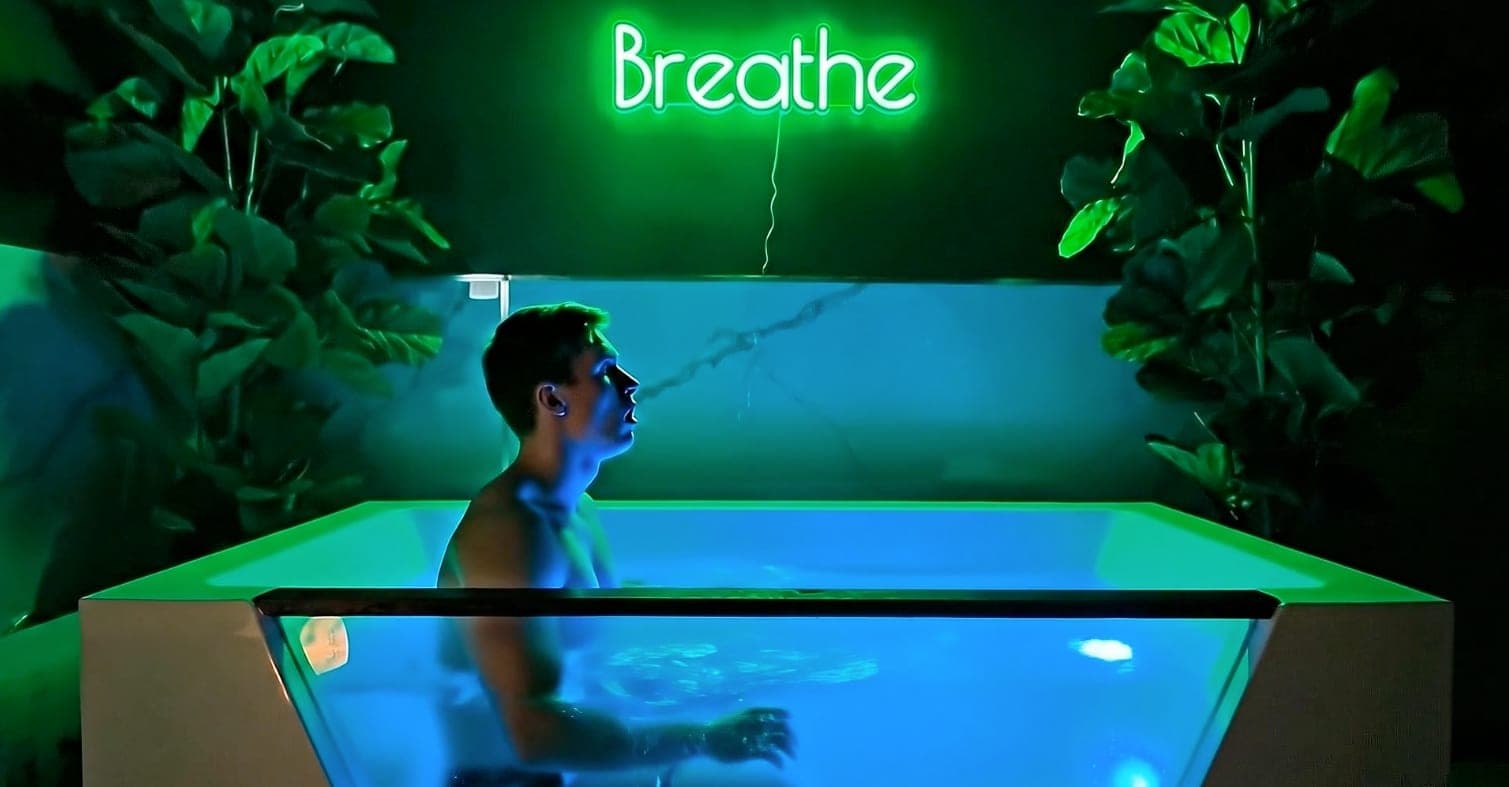
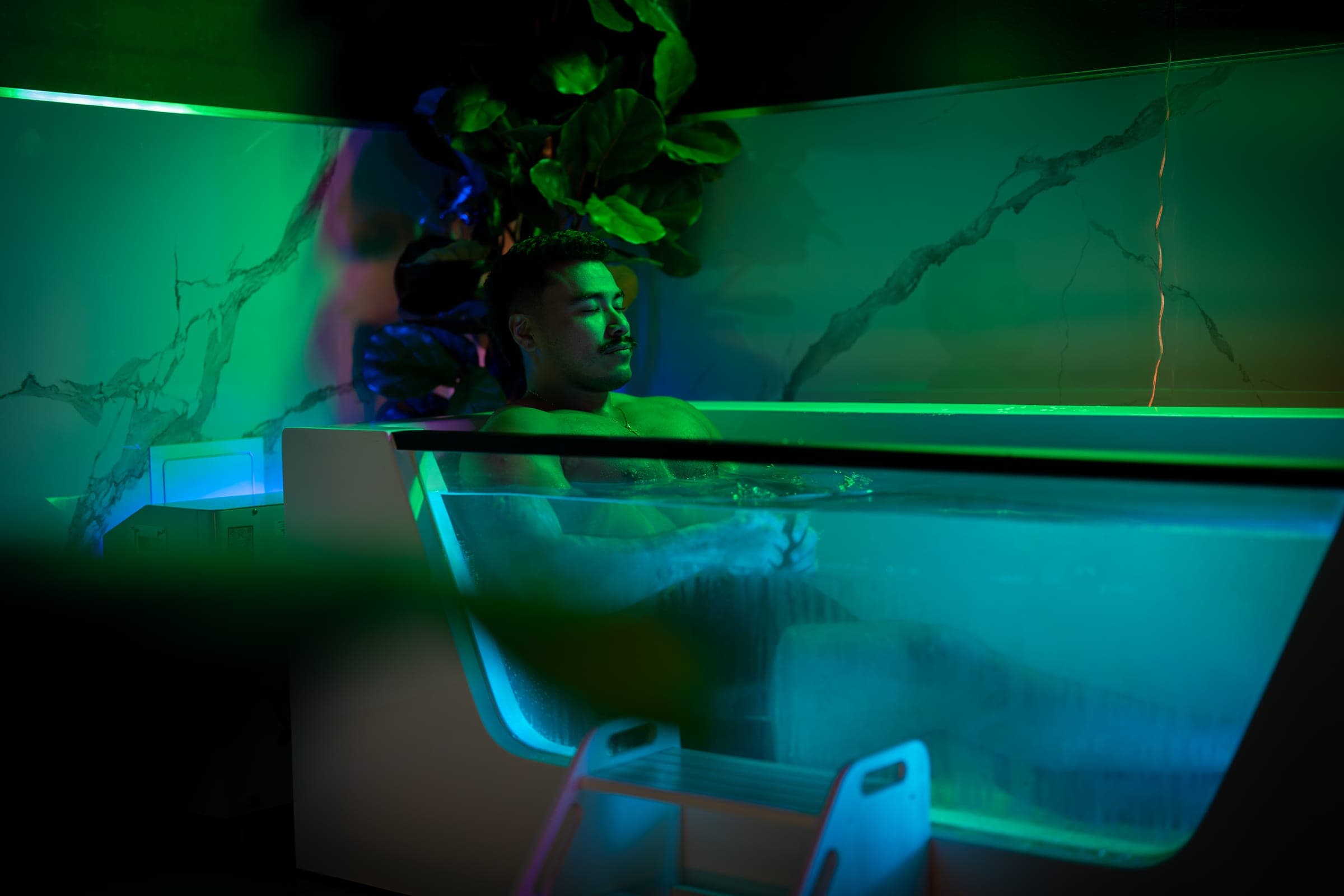
How long to stay in a cold plunge
Cold is the opposite of heat: it hits all at once. The first moments are the hardest, when your breath wants to race. Researchers call this the cold shock response, and a 2017 review of cold water immersion lists it among the risks to respect (Experimental Physiology, 2017). Get in slowly, breathe out long, and it settles.
Your first plunge
Thirty seconds. That's a real plunge. Step in, sit down to your shoulders if you can, breathe out slowly and count. Keep your hands out of the water if that helps. Our first-time cold plunge tips cover that first dip in more detail.
Once it's familiar
With practice, 1 to 3 minutes is common. Some people stay longer, but longer isn't the goal. A few calm minutes is plenty.
What the research used
Cold water studies mostly use warmer water than a plunge like ours, and longer stays:
- A meta-analysis of nine trials found cold water immersion eased muscle soreness after exercise slightly better than rest, with the best results at about 52 to 59°F for 11 to 15 minutes (Sports Medicine, 2016).
- A 2025 review of 11 trials covered dips from 30 seconds to 2 hours in water from about 45 to 59°F. It found lower stress 12 hours after cold immersion and reported improvements in sleep quality, while noting the evidence is still limited (PLoS One, 2025).
Our plunges are kept at 45 to 49°F, colder than almost all of that research, so shorter dips make sense: 30 seconds to start, a few minutes at most.
Sauna and cold plunge minutes at a glance
| Infrared sauna, per round | Cold plunge | |
|---|---|---|
| First visit | 10 to 15 min | About 30 sec |
| A few visits in | 12 to 18 min | 30 sec to 1 min |
| Once it's familiar | 15 to 20 min | 1 to 3 min |
These are common ranges, not targets. Your best number is the one that has you walking out feeling good, not wrung out.
Signs it's time to get out
Leaving early is always allowed. In the sauna, get out, sit somewhere cooler and sip water if you feel dizzy or light-headed, sick to your stomach, a pounding headache coming on, or your heart racing in a way that doesn't feel right.
In the cold plunge, get out, towel off and warm up if you can't slow your breathing, you're shivering hard, your fingers or toes go numb and stay numb, or you feel clumsy, confused or panicky. If any symptom doesn't ease once you've cooled down or warmed up, treat it seriously and get medical help.
When to skip the heat or the cold
- Skip the heat if you're sick or feverish, hungover, very dehydrated, or already overheated from a hot day outside.
- Skip the cold if you're already chilled or shivering, or if you have Raynaud's or a circulation condition and haven't talked to your doctor about it.
- Skip both if you've been drinking, or if you're pregnant or have a heart condition, high blood pressure or another medical concern and haven't checked with your doctor first.
How to build up gradually
- Change one thing at a time. More sauna time or more plunge time, not both in the same week.
- In the sauna, add a minute or two per round once your current time feels easy.
- In the plunge, add 15 to 30 seconds once you're getting in calmly.
- Use the clock. Time stretches in the cold and blurs in the heat. Every suite has a clock on the wall, so your phone can stay in your bag.
Drink water before and after, and stand up slowly when you leave the sauna. Our safety guide has the rest, and every suite at our San Diego and Temecula studios has an infrared sauna, a cold plunge and a shower in one private room.
Questions people ask.
How long should a beginner stay in a cold plunge?
About 30 seconds is a solid first plunge. Get out whenever you want, and add 15 to 30 seconds on later visits once you're getting in calmly.
How long should I stay in an infrared sauna the first time?
10 to 15 minutes is a comfortable first round. Leave sooner if you feel dizzy or unwell, and keep a second round a little shorter than the first.
How long should you cold plunge after a sauna?
The same as any plunge: around 30 seconds if you're new, 1 to 3 minutes once you're used to it. Stand up slowly from the heat, take a breath, then get in.
Can you stay in a sauna too long?
Yes. Long stretches in the heat can leave you dizzy, sick or dehydrated. Keep rounds to about 20 minutes or less, drink water, and get out at the first sign you've had enough.
Is it OK to stay in the cold plunge longer than 3 minutes?
Some experienced plungers do, and many cold water studies used longer stays in warmer water. In a plunge as cold as ours, a few minutes is plenty. Get out at the first sign of numbness or hard shivering.
Sources
- Laukkanen T, et al. Association between sauna bathing and fatal cardiovascular and all-cause mortality events. JAMA Internal Medicine, 2015.
- Laukkanen T, et al. Acute effects of sauna bathing on cardiovascular function. Journal of Human Hypertension, 2018.
- Mero A, et al. Effects of far-infrared sauna bathing on recovery from strength and endurance training sessions in men. SpringerPlus, 2015.
- Ketelhut S, Ketelhut RG. The blood pressure and heart rate during sauna bath correspond to cardiac responses during submaximal dynamic exercise. Complementary Therapies in Medicine, 2019.
- Tipton MJ, et al. Cold water immersion: kill or cure? Experimental Physiology, 2017.
- Machado AF, et al. Can water temperature and immersion time influence the effect of cold water immersion on muscle soreness? A systematic review and meta-analysis. Sports Medicine, 2016.
- Cain T, et al. Effects of cold-water immersion on health and wellbeing: a systematic review and meta-analysis. PLoS One, 2025.