Quick answer
- Get in slowly, breathe out long and steady, and aim for about 30 seconds the first time. That's a real first plunge.
- The first gasp is an automatic reflex called cold shock. Slow breathing and keeping your face out of the water make it easier.
- If you are pregnant, have a heart condition or any medical concern, check with your doctor before you try it.
In this article · 10 sections
Why people do it
First, the good part. People keep coming back to cold water for reasons research backs up:
- A mood lift. After a five-minute cold-water immersion, volunteers felt more active, alert, attentive and inspired, and less distressed and nervous (Biology, 2023).
- Less soreness after hard training. A Cochrane review found some evidence that cold-water immersion after exercise reduces the muscle soreness that shows up a day or two later (Cochrane Database of Systematic Reviews, 2012).
- The rush. Cold immersion sharply raises noradrenaline and dopamine in the blood (European Journal of Applied Physiology, 2000), which may help explain the clear-headed feeling people describe afterward.
Now, how to make the first one go well.
Before you get in
A little prep makes the first plunge much easier.
- Warm up first. Many people find the cold easier to face after a round in the sauna. You don't have to, but it helps.
- Rinse off. A quick shower washes off sweat and lotion and keeps the water clean.
- Tie your hair up if you don't want it wet, and take off jewelry.
- Put your towel within reach. You'll want it the second you're out.
- Decide your time before you start. Thirty seconds is a great first goal. Deciding in advance means you're not negotiating with yourself in the water.
Getting in
Slow is the move. There's no prize for jumping.
- Step in feet first, holding the edge.
- Stand for a moment and let your legs register the cold.
- Lower yourself in stages: knees, waist, chest.
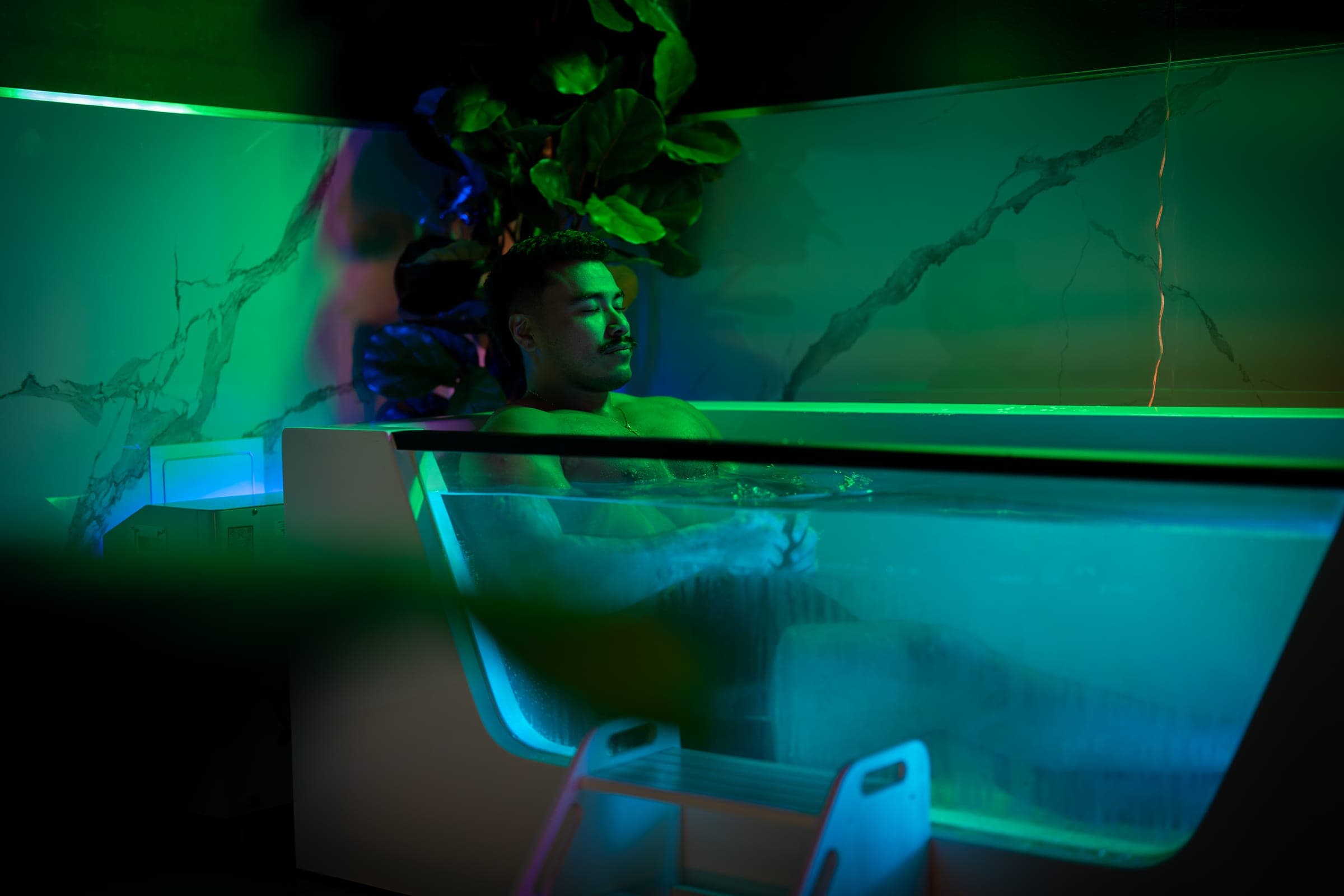
- Settle in up to your chest or shoulders, whatever feels right.
- Keep your head above water, especially the first time.
If your hands are the hardest part, rest them on the edge, out of the water. And if waist-deep is as far as you get today, that counts. Try a little more next round.
Breathing through the first seconds
Here's what to expect: the moment the cold hits your chest, you'll probably gasp and your breathing will speed up. Researchers call this the cold shock response. It's automatic, it's triggered by cold receptors in your skin, and it's the main reason to get in slowly and keep your face out of the water (Experimental Physiology, 2017). The same review notes that in lab tests, the breathing response was no bigger in 41°F (5°C) water than at 50 to 59°F (10 to 15°C), so a colder plunge doesn't necessarily mean a bigger gasp.
What helps:
- Breathe out long and slow, like you're blowing through a straw. Longer out than in.
- Count your breaths or count the seconds out loud. It gives your brain a job.
- Relax your shoulders and jaw. Tension makes it feel colder.
After the first stretch, the gasp usually settles and the cold feels steadier. One firm rule: no breath-holding games or forced fast breathing in the water. Keep it calm and steady.
What it feels like, start to finish
- The first few seconds: sharp. Your breath catches and everything in you says get out. This is the hardest part, and it passes.
- Around 15 to 30 seconds: your breathing slows, your skin tingles, and the cold starts to feel more like pressure than pain.
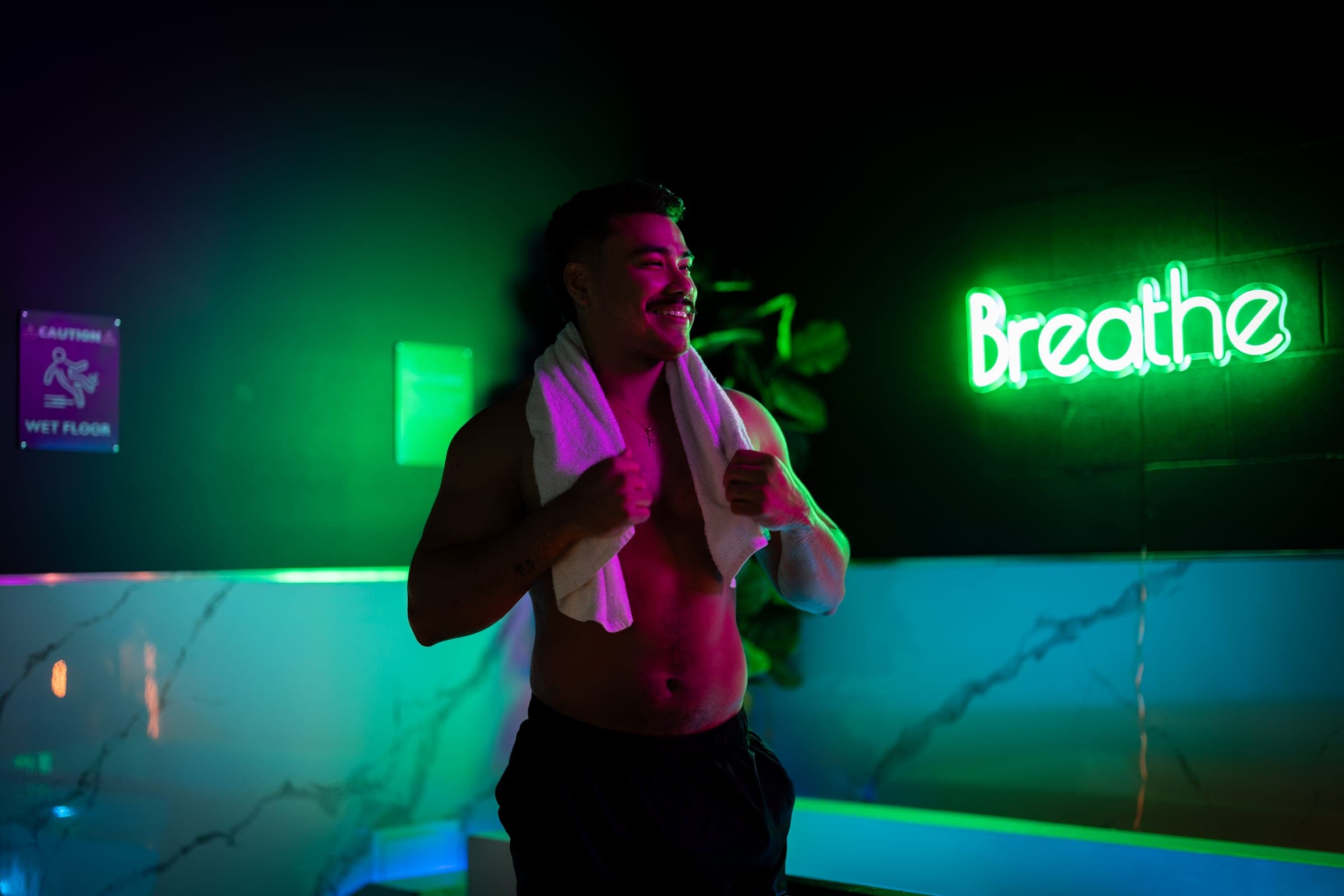
- Getting out: your skin flushes pink and a warm, buzzy feeling spreads as you dry off. Most people grin at this point.
Knowing the sequence makes the first seconds much easier to ride out.
How long to stay
Most first-timers start with about 30 seconds. If that feels fine, try a minute next time. There's no number you need to hit, and staying longer doesn't make it count more. We go deeper on timing in how long to stay in the sauna and plunge.
Get out right away if you feel dizzy, numb, confused or panicky, or if your breathing won't settle.
Getting out safely
The exit deserves as much care as the entry.
- Move slowly. Hold the edge as you stand up.
- Step out carefully. The floor around a plunge gets wet.
- Pause for a breath once you're standing, then reach for your towel.
Warming up afterward
Dry off and warm up at whatever pace feels good: back into the sauna, a warm shower, or dry clothes and moving around. Shivering for a bit afterward is common. Give it time rather than rushing.
If you're doing rounds, heat and cold can go back and forth a few times. Which to start with is mostly preference; we cover it in sauna or plunge first.
Who should check with a doctor first
Cold water is a real stress on the body. Talk to your doctor before you try a plunge if you:
- Are pregnant.
- Have a heart condition or high blood pressure.
- Have Raynaud's or another condition affected by cold.
- Have any other medical concern.
And never plunge after drinking alcohol. Our safety page has more.
Your first plunge at CBR
The best part of a first plunge in a private suite is that nobody is watching. No line behind you, no one timing you, no audience if you yelp. The plunge is kept at 45 to 49°F, a few steps from the infrared sauna, with your own shower and towels in the same room, in San Diego or Temecula.
Take it one round at a time. If you want the whole visit mapped out, read your first visit. Thirty seconds in, a calm breath, and you've done it.
Questions people ask.
How long should I stay in a cold plunge the first time?
About 30 seconds is a great start. If you feel fine, try a minute next time. Get out whenever you want.
How cold is the plunge at CBR?
Our plunges are kept at 45 to 49°F.
Is it normal to gasp when I get in?
Yes. It's called the cold shock response, an automatic reaction to cold water on your skin. Breathe out long and slow, and it usually settles as you keep your breathing steady.
Should I put my head under?
No need. Keeping your face out of the water is the safer, more comfortable choice, especially the first time.
Should I do the sauna or the plunge first?
Either works. Many people start with a round in the sauna, then plunge, then go back to the heat.
What if I can only get in up to my waist?
That's fine, and it still counts. Breathe, stay as long as feels okay, and try going a little deeper next round.
Sources
- Yankouskaya A, et al. Short-term head-out whole-body cold-water immersion facilitates positive affect and increases interaction between large-scale brain networks. Biology, 2023. PubMed
- Bleakley C, et al. Cold-water immersion (cryotherapy) for preventing and treating muscle soreness after exercise. Cochrane Database of Systematic Reviews, 2012. PubMed
- Srámek P, et al. Human physiological responses to immersion into water of different temperatures. European Journal of Applied Physiology, 2000. PubMed
- Tipton MJ, Collier N, Massey H, Corbett J, Harper M. Cold water immersion: kill or cure? Experimental Physiology, 2017. PubMed