
How Long Should Contrast Therapy Last?

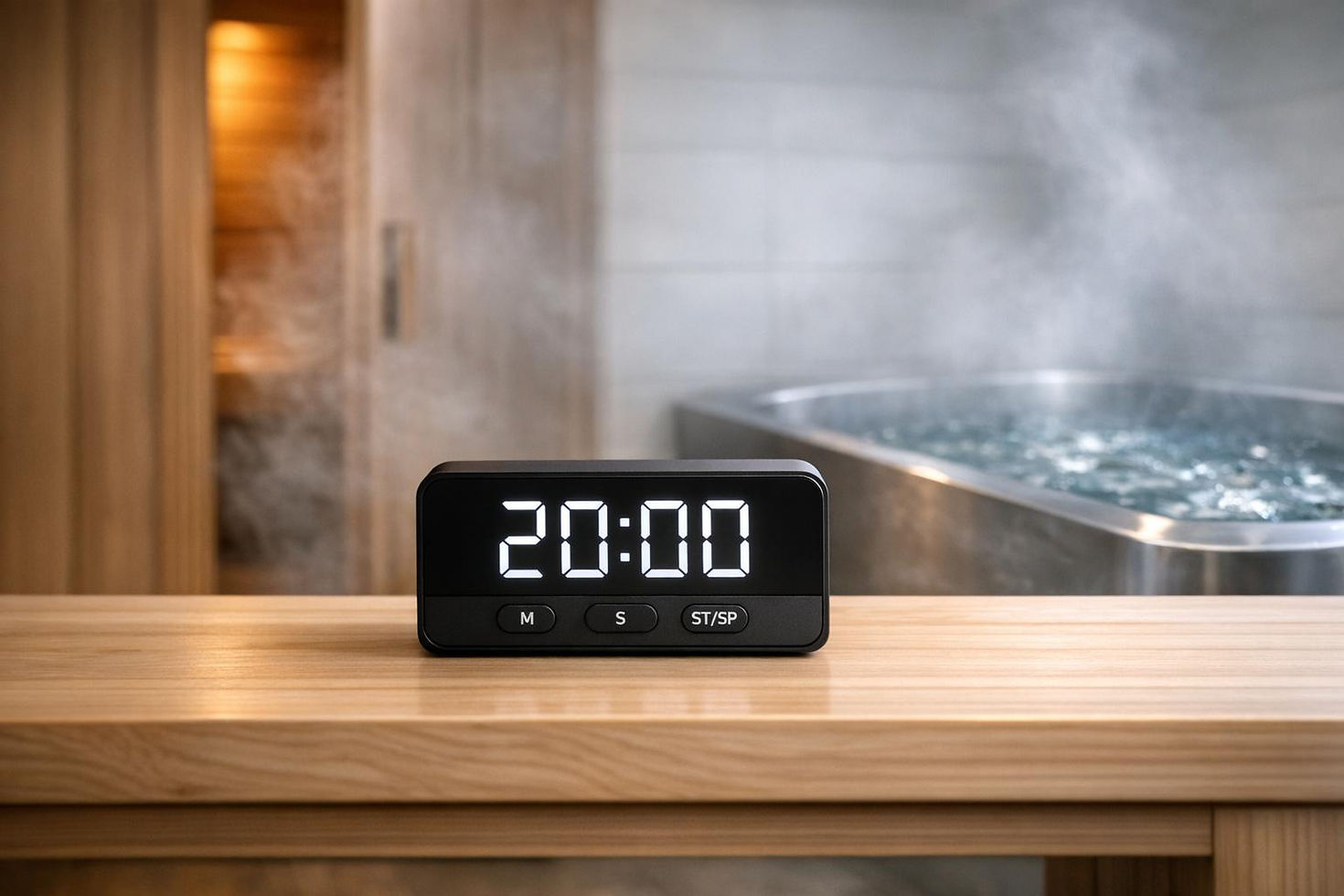
The ideal length of a contrast therapy session depends on your goals and experience level. For most people, 15–30 minutes is recommended, alternating between heat and cold phases. Beginners should start shorter, while advanced users can extend sessions up to 60 minutes or more.
Heat Phase: Typically lasts 3–5 minutes at 100–104°F (or longer in infrared saunas).
Cold Phase: Usually 30–90 seconds at 50–59°F.
Cycles: 3–6 rounds are common, with a heat-to-cold ratio of 3:1 or 4:1.
Ending: It's often suggested to finish with cold for anti-inflammatory benefits.
Your session length should match your experience and goals:
Muscle Recovery: 15–30 minutes, 3–5 cycles, end with cold.
Stress Relief: 15–20 minutes, 2–3 cycles, end with heat for better sleep.
Chronic Pain: 15–20 minutes, moderate temperatures, 3–4 cycles.
Consistency matters more than session length. Aim for 1–2 sessions weekly for general wellness or up to 3–4 sessions for intense training recovery. Always listen to your body and increase duration gradually to avoid strain.
How Long Should a Contrast Therapy Session Be?
For most people in good health, 15 to 30 minutes is the sweet spot for a contrast therapy session. This time frame allows for several effective cycles without putting unnecessary strain on your cardiovascular system. If you're more experienced and following a sauna-based protocol, sessions can stretch to 60 minutes, but beginners are better off starting shorter.
Standard Hot and Cold Phase Timing
A typical contrast therapy session alternates between heat and cold. The heat phase usually lasts 3–5 minutes at temperatures of 100–104°F, while the cold phase is shorter, ranging from 30–90 seconds at 50–59°F. Most sessions follow a 3:1 or 4:1 heat-to-cold ratio.
"The cycling between these two states, repeated over a session, creates a pumping action through the vascular and lymphatic systems." - Daniel Pietruszewski, Optimum Health
How Cycles Add Up to a Full Session
A full session generally includes 3 to 6 cycles of alternating heat and cold. For example, with a 4:1 ratio (4 minutes of heat and 1 minute of cold), three cycles add up to about 15 minutes, while six cycles take you closer to 30 minutes. This structure makes it easy to plan your session.
It’s worth noting that many experts recommend ending with cold. Wrapping up on a cold phase can enhance anti-inflammatory effects and leave you feeling more alert, as outlined by the Søberg Principle.
These cycle guidelines give you a framework to adjust your session based on your equipment and personal preferences.
How Infrared Saunas Affect Session Timing
The type of heat source you use, such as an infrared sauna, can influence how you structure your session. Infrared saunas, like those offered by Conscious Body Recovery, operate at 120–150°F and use radiant energy to heat your body directly, unlike traditional saunas that heat the air at 170–200°F.
"Infrared saunas operate at lower ambient temperatures of 130 to 150 degrees but heat the body directly through radiant energy, producing a deep sweat at a more tolerable temperature." - Daniel Pietruszewski, Optimum Health
Even with these lower temperatures, infrared saunas fit well into standard contrast therapy timing. Hot phases typically last 10 to 20 minutes per cycle, and the total session length remains within the 15 to 30-minute range for most users. The gentler heat makes it easier to stick with the routine, which is more important than pushing through discomfort. By understanding these differences, you can fine-tune your sessions to suit your recovery goals.
sbb-itb-10d9b3e
Adjusting Session Length Based on Your Goals and Experience
How long your contrast therapy session lasts should depend on your experience level and what you're hoping to achieve. Both factors are key to determining the right balance for your practice.
Suggested Durations by Experience Level
Where you are in your journey matters more than you might think. Diving into long sessions too soon can put unnecessary strain on your body, especially your cardiovascular system, and might make the whole experience feel overwhelming.
Experience Level | Heat Phase Length | Cold Phase Length | Rounds | Total Time |
Beginner | 10–15 min (140–170°F) | 30–60 sec (55–60°F) | 1–2 | 15–25 min |
Intermediate | 15–20 min (160–185°F) | 1–3 min (45–55°F) | 2–3 | 25–45 min |
Advanced | 20–25 min (180–195°F) | 3–5 min (38–45°F) | 3–5 | 45–90 min |
Instead of making each phase longer, focus on gradually increasing the number of cycles. For example, advanced users doing 3–5 rounds aren’t spending significantly more time in each phase - they’re simply repeating the process more often.
Your experience level not only shapes the session length but also helps you fine-tune the session to meet your specific wellness goals.
Matching Session Length to Your Wellness Goal
Your recovery or wellness goals will further influence how you structure your session. Here’s what research suggests for some common objectives:
Muscle Recovery: Aim for a total session lasting 15–30 minutes with 3–5 cycles, maintaining a heat-to-cold ratio of 3:1 or 4:1. Always finish on the cold phase, as this can reduce delayed onset muscle soreness (DOMS) by up to 31%.
Stress Relief: A 15–20 minute session with 2–3 gentle cycles works well. If you’re doing this in the evening, consider ending on heat or a neutral temperature to help your body naturally cool down for better sleep.
Chronic Pain Management: For managing pain, 15–20 minutes with moderate temperatures and 3–4 cycles (3–4 minutes of heat followed by 1 minute of cold) may be effective. Infrared heat is particularly helpful here, as it penetrates deeper into tissues even at lower ambient temperatures.
Conscious Body Recovery offers tailored session formats that cater to these varying needs and experience levels.
Session Length Options at Conscious Body Recovery
Conscious Body Recovery provides private sessions in three time formats - 25, 55, and 85 minutes - designed to fit beginner, intermediate, and advanced protocols. Each session includes time for preparation and post-session recovery.
25-minute sessions are ideal for beginners or anyone looking for a quick recovery boost. These allow for 1–2 rounds while keeping things manageable.
55-minute sessions are perfect for intermediate users, offering enough time for 2–3 full cycles with smooth transitions between phases.
85-minute sessions are designed for advanced protocols, supporting 3–5 rounds. These also include extra time for natural rewarming at the end, which can help extend the metabolic benefits of finishing on cold.
All sessions are private, self-serve, and available as single bookings, packages, or memberships, giving you the flexibility to choose what suits your practice best.
Staying Safe: Knowing Your Limits During Contrast Therapy
Contrast therapy can be intense on the body, and pushing beyond your limits can lead to risks. It's crucial to recognize your body's signals and respond appropriately during your session.
Signs You've Had Too Much Heat or Cold
Your body will let you know when it's time to stop. During the heat phase, pay attention to symptoms like dizziness, nausea, severe headaches, chest pain, or muscle cramps. These are signs of heat exhaustion, and it's important to exit immediately rather than trying to endure.
The cold phase has its own set of red flags. These include numbness in your hands or feet that doesn’t go away after exiting, uncontrollable shivering, erratic breathing, or sudden loss of coordination. As Tyler McDonald, NASM-CPT, CNC, explains:
"Spending more than 20 minutes in the ice bath... doesn't give you 'extra' recovery; it just increases the risk of tissue damage or making your muscles feel stiff and 'frozen' rather than recovered."
If you notice any of these signs, stop the session immediately. Dry off and let your body return to a normal temperature gradually. If symptoms don’t improve, seek medical help.
Who Should Start With Shorter Sessions
Some individuals need to approach contrast therapy with extra caution. Beginners, older adults, and those with medical conditions like cardiovascular disease, uncontrolled hypertension, Raynaud's phenomenon, neuropathy, or diabetes should limit themselves to 10–15 minute sessions with milder temperatures and only 1–2 cycles. Pregnant individuals and those recovering from surgery should consult a healthcare provider before starting.
Additionally, women with stress-sensitive hormonal conditions, such as PCOS, may find that extreme cold triggers inflammation instead of reducing it.
How to Build Up Session Length Over Time
Gradual progression is the safest way to adapt to contrast therapy. Over 2–3 weeks, you can slowly increase session length, but keep in mind that the benefits generally level off after 30–35 minutes of active therapy. Begin with 1–2 moderate cycles and increase as your body gets used to the routine.
To help your body adjust, practice slow nasal breathing (4–6 breaths per minute) during transitions. This technique can enhance your thermal tolerance by up to 30%, making the cold phase feel much more manageable.
Adding Contrast Therapy to Your Weekly Schedule
How Often Should You Do Contrast Therapy?
Once you’ve nailed down the ideal session length, the next step is figuring out how often to incorporate contrast therapy into your routine. The frequency depends on what you’re aiming to achieve. For general wellness, 1–2 sessions per week can boost circulation and help manage stress better. If you’re in the middle of an intense training cycle, bumping this up to 3–4 sessions weekly might reduce delayed onset muscle soreness (DOMS) by as much as 26% within 24 hours after exercising.
Looking at long-term cardiovascular health? Research from Finnish studies suggests that using a sauna 4–7 times a week could lower the risk of cardiovascular disease by 63% compared to sticking to just once a week.
For the best results, aim to hit 57 minutes of heat exposure and 11 minutes of cold exposure per week. Spread this across at least three sessions to tap into the metabolic and mood-enhancing effects.
How to Structure a 25-, 55-, or 85-Minute Session
Conscious Body Recovery provides three session durations - 25, 55, and 85 minutes - to suit different schedules and recovery goals:
25-minute session: Perfect for a quick post-workout recovery. It stimulates your vascular system without taking up too much time.
55-minute session: A balanced option that allows for two full cycles plus some rest.
85-minute session: Best for those looking to focus on cardiovascular conditioning or achieve deep recovery.
Your choice depends on your goals and time availability. For detailed session structures based on your experience, check the breakdown provided earlier in the guide.
One important tip: if you’re focused on muscle growth, avoid starting the cold phase too soon after strength training. Waiting at least 4 hours ensures you don’t interfere with the anabolic signaling your muscles need to repair and grow.
Why Consistency Matters More Than Session Length
While session length and frequency are important, consistency is the real game-changer. Regular sessions are what lead to lasting improvements. The benefits - like better arterial elasticity, improved heart rate variability, and enhanced stress management - build up over time with steady effort.
"Consistency across sessions matters more than extreme duration in any single cold exposure." - Connell Kennelly, Rí Science
Flexible membership options make it easier to stay consistent. For instance, the Silver Unlimited membership ($199/month) is ideal for 25-minute sessions, while the Gold Unlimited membership ($299/month) supports longer, 55-minute sessions. Regardless of the membership or session length you choose, the key to success lies in making it a regular part of your weekly routine.
Conclusion: Choosing the Right Contrast Therapy Duration for You
When it comes to contrast therapy, there’s no one-size-fits-all answer for session length. The ideal duration depends on your starting point, your goals, and how your body responds over time. If you’re new to this practice, it’s best to begin with 2 rounds and see how it feels. More experienced users can work up to 3–4 rounds as they become comfortable.
The timing of your session should align with your specific goals. Whether it’s athletic recovery, improving sleep, boosting morning energy, or supporting cardiovascular health, each objective may require slight adjustments to your routine. Research suggests that achieving a weekly total of 57 minutes of heat exposure and 11 minutes of cold, spread across at least three sessions, can maximize benefits for mood and metabolism. But remember, consistency is what truly makes the difference.
Safety should always come first. Start conservatively, listen to your body, and increase intensity or duration gradually. Contrast therapy isn’t about pushing through discomfort - it’s about creating a sustainable habit that delivers results over time.
FAQs
Should I eat or hydrate before contrast therapy?
It's important to drink plenty of water before starting contrast therapy. Staying hydrated helps prevent dehydration during the process. While eating beforehand isn't a must, prioritizing proper hydration is key to preparing for your session.
What’s the safest way to transition between heat and cold?
The best way to switch between heat and cold during contrast therapy is to do it gradually. Take short breaks of about 1–5 minutes, allowing your body to adapt. During this time, focus on maintaining steady, controlled breathing and make sure to stay hydrated. This method reduces the risk of cardiovascular stress and helps your body transition more comfortably.
Can contrast therapy affect sleep if I do it at night?
Contrast therapy can help improve sleep when done at night, especially if you finish with a cold plunge. The cold helps lower your core body temperature, which can encourage relaxation. However, if you’re doing it later in the evening, ending with heat or a neutral temperature might be a better choice to avoid overstimulation and support a restful night.


Comments