Synced word for word from SEObot (scripts/seobot-sync). Not fact-checked: health claims, prices, offers and quotes are as first published. Prune or rewrite after launch.
Quick answer
- My advice for your first contrast therapy session: start with 8 to 10 minutes of heat, try 30 seconds or less of cold, then rest until your breathing and balance are steady.
- Prepare first: Arrive hydrated, skip alcohol, and check with your clinician if you’re pregnant, have heart or circulation concerns, or take medications that affect temperature regulation.
- Keep the plunge controlled and safe: Enter slowly, keep your head above water, and breathe without holding your breath.
In this article · 6 sections
My advice for your first contrast therapy session: start with 8 to 10 minutes of heat, try 30 seconds or less of cold, then rest until your breathing and balance are steady. One round is enough. This isn’t a test of how much discomfort you can take.
Here’s what I’d keep in mind:
- Prepare first: Arrive hydrated, skip alcohol, and check with your clinician if you’re pregnant, have heart or circulation concerns, or take medications that affect temperature regulation.
- Keep the plunge controlled and safe: Enter slowly, keep your head above water, and breathe without holding your breath. Stop if you feel unwell, especially with dizziness, chest discomfort, or trouble breathing.
- Leave room for rest: Choose a 25-, 55-, or 85-minute visit that allows time to change, shower, and recover, not just complete rounds.
- Build slowly: Start with one or two visits per week, track how you feel, and change only one thing at a time.
Research on infrared sauna-cold plunge routines is limited. I’d treat this as a recovery routine, not medical treatment, despite the many benefits of contrast therapy for physical wellness, with no proven best weekly schedule or warm-versus-cold finish.
Get Ready for Your First Session
Bring a swimsuit, water bottle, dry clothes, and anything listed in the first-visit instructions. Arrive hydrated, sip water between rounds, and stay within the studio’s time and temperature limits. [1] With those basics covered, follow the warm-first routine below.
Postpone your session if you’re ill, dehydrated, or have consumed alcohol. Don’t drink alcohol before a session. It can affect your judgment and your body’s ability to regulate temperature, adding risk during heat and cold exposure. [4][10]
When to Check With a Doctor First
Check with your clinician before booking if you’re pregnant or have heart disease, high blood pressure, arrhythmias, Raynaud’s disease, or circulation issues. Also review any medications that affect sweating, temperature regulation, or blood pressure. [2]
Warning Signs: When to Stop or Get Help
Stop the exposure immediately if you experience dizziness, lightheadedness, faintness, chest discomfort, confusion, numbness, uncontrolled shivering, or trouble breathing. Exit carefully and get help before starting another round. Never turn breath-holding or pushing through painful symptoms into a challenge. [4][10]
Before entering the suite, review the assistance instructions and keep your phone or another way to contact help within reach. [10] If none of these concerns apply, move on to the step-by-step routine.
A Step-by-Step Contrast Therapy Routine
After you’ve cleared the safety checks, start your first session with heat, then move to cold.
Step 1: Start With 10 to 15 Minutes of Heat
Begin in the infrared sauna. 10 to 15 minutes is a typical starting range for beginners, though 8 to 10 minutes may be enough for your first visit. Leave sooner if you feel uncomfortable. [1]
Step 2: Start With 30 Seconds of Cold
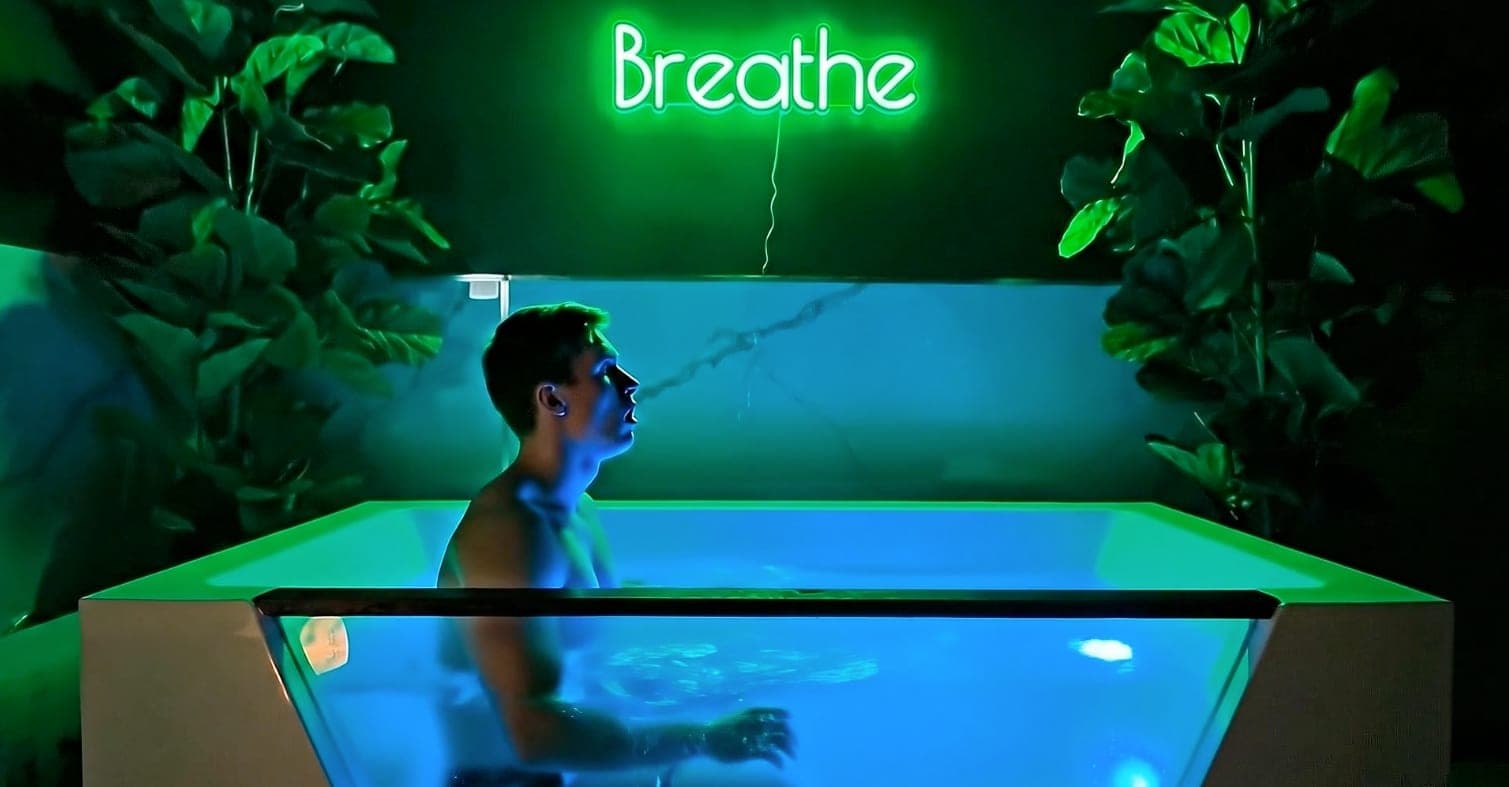
After the sauna, stand up slowly. Enter the plunge slowly, feet first, and keep your head above water. For your first cold exposure, aim for 30 seconds or less. With experience, you can work within a range of about 30 seconds to 3 minutes, depending on your breathing and tolerance. [1][4]
Step 3: Breathe Steadily in the Cold
Cold shock can make you gasp and breathe faster. Keep your breathing steady and unforced, with a long, slow exhale through your mouth. Don’t hyperventilate or hold your breath. If breathing remains difficult, get out right away. Don’t wait for the timer. [4]
Step 4: Rest Before Another Round
Rest for 1 to 2 minutes, or until your breathing and balance are steady. One round is enough for your first session. If you tolerate it well, build to two rounds, then three. [1]
Once you know how your body responds, choose the finish that feels best. Understanding how contrast therapy reduces inflammation can help you decide whether to prioritize recovery or alertness.
Step 5: Decide Whether to Finish Cold or Warm
Finish with a brief cold exposure, comfortable warmth, or rest without another exposure. Dry off and make sure you feel steady before leaving. [1]
Beginner Timing Guide
Plan Your 25-, 55-, or 85-Minute Visit
Use the protocol above to choose an optimal contrast therapy timing for your booking length that covers your whole visit, not just heat and cold. Allow time for check-in, setup, changing, and showering, along with your rounds and rest breaks. [1]
| Booking | Example beginner plan | What it allows for |
|---|---|---|
| 25 minutes | Settle in for 2 minutes, then do 10 minutes of heat, 30 seconds of cold, and 2 minutes of rest. Use the remaining time to shower and change. | One short round, plus shower time. |
| 55 minutes | Settle in, then do two rounds of 12 minutes of heat, 30 to 60 seconds of cold, and 3 to 5 minutes of rest. Leave time to cool down, shower, and change. | Two short rounds with breaks. |
| 85 minutes | Settle in, then do up to three rounds of 10 minutes of heat, 30 seconds of cold, and at least 5 minutes of rest. Use the remaining time for longer breaks, cooling down, showering, and changing. | Up to three short rounds with longer rests. |
For your first session, keep cold exposure to 30 seconds or less and spend extra time resting. A longer booking gives you more breathing room, not more rounds to complete. [1]
These plans show how a simple first visit can fit into your private-room booking. Once you've mastered the basics, you can add contrast therapy to your daily life for long-term wellness.
What Your Private Suite Includes
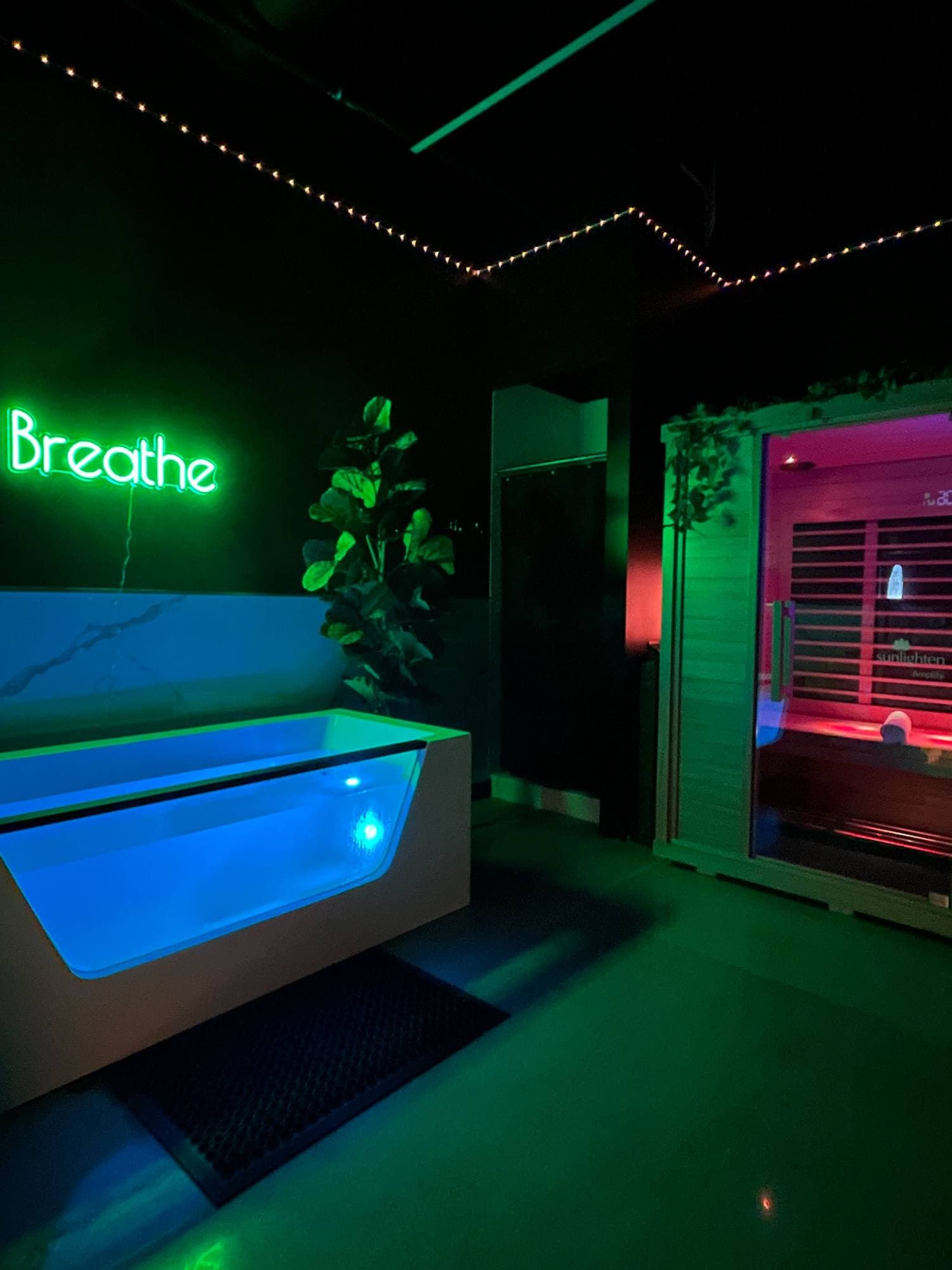
Conscious Body Recovery offers a private room with an infrared sauna, cold plunge, and shower. Book 25, 55, or 85 minutes, either solo or with up to two guests. See the contrast therapy session details. [1]
Studio Locations and First-Visit Information
- San Diego: 4030 Sports Arena Blvd, Suite B, San Diego, CA 92110, near Point Loma and Old Town.
- Temecula: 25389 Madison Ave, Suite C-101, Murrieta, CA 92562.
Both studios are inside Self Made Training Facility. [1]
Check the first-visit information for preparation details and the 50% off first-session offer for new guests. [1]
How Often Should You Do Contrast Therapy?
Once you feel comfortable with the sauna and cold plunge protocols, start with one or two sessions per week. There’s no established weekly protocol for this exact routine.[1][2]
Session Schedules Used in Research
Studies on sauna and cold plunge timing usually look at single sessions or short blocks of repeated sessions, not a long-term weekly schedule.
Some research on Scandinavian winter swimmers who combined saunas with cold dips used 2 to 3 sessions per week. [1]
Treat these ranges as a starting point, then adjust based on your recovery.
Track Your Response Before Adding Sessions
After each visit, record your time in heat and cold, number of rounds, breathing comfort, and any symptoms. Also note how you feel before your next visit.
Give yourself more recovery time when needed. Change only one variable at a time, such as session duration or weekly frequency. Never increase exposure to push through warning symptoms.
Conclusion: Start Warm, Keep Cold Exposure Short
Arrive hydrated, eat lightly, and skip alcohol. Begin with 10 to 15 minutes of heat, followed by about 30 seconds of cold. Breathe steadily during the plunge, then rest before deciding whether to continue.[1][4]
Start with one round. Check how your body feels before adding another, and follow an inflammation control checklist to add rounds only as tolerated.[1]
Stop immediately if you feel dizzy, nauseated, lightheaded, short of breath, or have chest pain.[1] There’s no established best weekly dose or finishing order. Choose the finish that feels best for you.[1]
See the first-visit information for preparation and booking details.
FAQs
What temperatures should I start with?
At Conscious Body Recovery the infrared saunas reach about 170°F and the plunges are kept at 45 to 49°F [1]. That contrast is the point, so on a first visit change the time, not the temperature.
If you’re new to this, keep each exposure short rather than chasing longer times. Pay attention to how you feel, and stop if you become uncomfortable or unwell [2].
Should I do contrast therapy before or after a workout?
If your goal is recovery, consider contrast therapy within two hours after a workout. Research suggests it may help reduce muscle soreness and limit strength loss compared with passive rest [1][2].
Listen to your body and stay hydrated. If you have any pre-existing health conditions, check with your doctor before starting [4].
How do I know when to add another round?
There’s no set rule for how many rounds to do. If you feel comfortable and your body is responding well, you can consider another round [1][2]. Many people find two to three rounds ideal. As you gain experience, you can build up gradually over several weeks [1][2][4].
Stop immediately if you feel lightheaded, dizzy, or otherwise unwell [1].