

ROS and Cellular Recovery: Key Insights

ROS are not always the problem. Too much ROS for too long is the problem. In small bursts, ROS help with cell signaling, exercise response, immune activity, and tissue repair. But when ROS stay high, they can damage DNA, proteins, fats, and cell membranes and slow recovery.
Here’s the short version:
Low ROS = useful cell signals
High ROS = oxidative stress
Timing, dose, and location all matter
Sleep, food, water, and recovery habits help keep balance
Sauna and cold exposure can help when used in short, controlled sessions
A few points stand out fast:
The body makes ROS all the time.
The goal is not to erase ROS.
Cells rely on systems like glutathione, catalase, SOD, thioredoxin, and Nrf2 to keep things in range.
Detox happens in 3 main phases, mostly through the liver, kidneys, gut, lungs, and skin.
Day-to-day habits often matter more than any “cleanse.”
If I boil the article down to one idea, it’s this: recovery works best when stress is brief and support is steady. That means enough challenge to trigger repair, but not so much that the system stays overloaded.
Topic | Short answer |
What ROS do | Help signaling at low levels; harm cells at high levels |
When ROS help | During short, controlled bursts, such as exercise |
When ROS hurt | When levels stay high and antioxidant systems fall behind |
What supports balance | Sleep, hydration, nutrient-dense food, fiber, and measured heat/cold use |
What to watch | Energy, soreness, digestion, focus, and skin changes |
So if you want the plain answer: keep the stress dose controlled, and support recovery every day.
10 - Can You Detoxify and Manage Oxidative Stress? | What “Detox” Actually Means
sbb-itb-10d9b3e
How ROS Affect Recovery and Repair
Building on the dose-and-context rule above, ROS can help recovery when they show up in short, controlled bursts and stay limited to the right place. Their effects hinge on three things: how much is present, when it appears, and where in the cell it’s made.
That timing-and-location piece matters a lot. The same ROS signal that helps the body adapt after a hard workout can also slow healing if it hangs around too long or appears in the wrong spot. Small pulse? Helpful. Constant overload? That’s where trouble starts.
ROS in Inflammation, Immune Signaling, and Tissue Healing
When tissue takes a hit from exercise, injury, or other physical stress, ROS help direct inflammation, immune signaling, and tissue repair. In the short term, that’s part of the body’s normal response. It’s how the system gets the memo that damage happened and repair needs to begin.
If ROS stay high, though, the picture changes. They can add to prolonged inflammation and slower healing. In recovery, timing matters just as much as total amount.
ROS in Mitochondria, Energy Production, and Exercise Adaptation
ROS made in mitochondria during exercise can act like a signal flare. In controlled amounts, they help trigger mitochondrial biogenesis and support antioxidant defenses over time.
But when ROS stay high from chronic overload, the balance shifts. Instead of helping adaptation, excess ROS can contribute to mitochondrial dysfunction, energy depletion, slower recovery, muscle soreness, and slower recovery.
Controlled ROS vs. Excess ROS: A Side-by-Side Look
This is where the split becomes easy to see:
Category | Adaptive ROS (Controlled) | Oxidative Injury (Excess) |
Short-term Effects | Nrf2 and heat shock proteins activate; brief inflammation | Lipid peroxidation; chronic inflammation |
Mitochondrial Impact | Stimulates mitochondrial biogenesis and health | Potential mitochondrial dysfunction and energy depletion |
Recovery Outcome | Improved strength, resilience, and tissue repair | Slower recovery, muscle soreness, and slower recovery |
Timing Context | Acute bursts during or immediately after exercise | Chronic elevation due to unresolved stress or chronic overload |
Cells then lean on antioxidant defenses to keep excess ROS in check.
The Body's Antioxidant and Detoxification Systems
When ROS builds up faster than the body can deal with it, cells have to step in fast. They use antioxidant enzymes first to neutralize reactive molecules, then detox pathways to process and remove the leftovers.
Key Antioxidant Defenses: Glutathione, Catalase, SOD, and Thioredoxin
Glutathione, SOD, catalase, and thioredoxin work as a team to neutralize ROS and bring redox balance back into check. Think of them as the cell’s cleanup crew: one handles a reactive molecule, another helps break it down further, and another helps reset the system so it can keep going.
Nrf2 helps direct this response by turning on genes tied to antioxidant defense and detox enzymes. That gives cells more support when oxidative stress starts to climb.
Nrf2 and the Genes That Strengthen Cell Protection
Nrf2 switches on genes that increase antioxidant defenses and detox enzymes, which helps cells deal with oxidative stress during recovery. In plain terms, it helps the body make more of the tools it needs when stress has already started to pile up.
Phase 1, Phase 2, and Phase 3 Detoxification Explained
Detoxification is the body’s step-by-step way of processing and removing compounds, mainly through the liver, kidneys, and gut. The same antioxidant systems that deal with ROS also help the liver do its job when compounds need to be prepared for removal.
Phase | Primary Location | Function | Key Limitation |
Phase 1: Transformation | Liver | Enzymes convert toxins into intermediate compounds | Can generate reactive byproducts; needs antioxidant support |
Phase 2: Conjugation | Liver | Attaches molecules (e.g., glutathione, sulfate) to reactive intermediates, making them water-soluble for elimination | Depends on sufficient nutrients and cofactors |
Phase 3: Excretion | Kidneys, Gut, Lungs, Skin | Transports and eliminates processed compounds via urine, feces, breath, and sweat | Relies on efficient transport and excretion |
These systems need basic day-to-day support to work well:
Vitamins B, C, and E
Foods high in antioxidants
Fiber
Enough water
Sleep, hydration, and nutrient intake also shape daily redox balance. This balance is further influenced by how circadian rhythm impacts recovery when using contrast therapy. Miss those basics, and the system has a harder time keeping up.
Daily Habits That Support Redox Balance
Sleep, Hydration, Nutrition, and Recovery Timing
Once redox systems are in place, your day-to-day habits decide how well those systems can keep pace.
Sleep is one of the biggest inputs. During deep sleep, the body supports repair and waste clearance.
Hydration also matters. It helps kidney function and compound elimination. Drink water steadily across the day, and bump up your intake before and after sauna or cold plunge sessions.
Food plays a big part too. Berries, leafy greens, nuts, seeds, whole grains, and vegetables help support redox balance and elimination. Vitamins B, C, and E also play important roles in Phase 1 and Phase 2 liver detoxification.
Heat and Cold Exposure as Recovery Tools
Heat and cold tend to work best as short, controlled stressors, not as endurance tests.
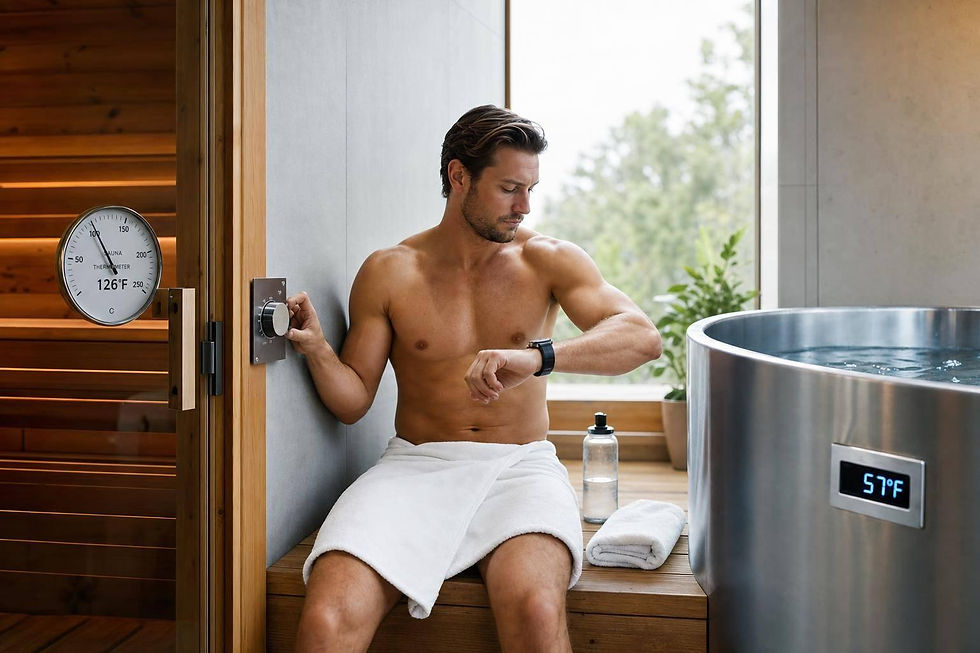
Infrared sauna and cold plunge sessions can work well in a recovery routine when you ease into them and stay hydrated. Think of them as tools that support recovery, not a shortcut. These methods are particularly effective for reducing inflammation through contrast therapy.
For a private contrast-therapy option in San Diego, Conscious Body Recovery offers infrared sauna and cold plunge sessions in 25-, 55-, and 85-minute options.
Safety Guidelines for Sauna and Cold Plunge Use
Start slowly, hydrate before and after each session, and avoid alcohol beforehand.
Stop right away if you feel dizzy, lightheaded, or have chest discomfort.
Putting This Information to Use
A Simple Redox-Support Routine
Now that the basics are clear, the next step is simple: keep ROS in a healthy range with a routine you can stick with.
Start with the basics. Get steady sleep, drink water across the day, and build meals around foods that are high in antioxidants and fiber. That day-to-day rhythm helps support normal detox function.
You can also add heat or cold exposure, but keep it conservative. Think short, tolerable sessions, not a test of willpower. A little heat. A little cold. Then stop if symptoms show up. If you feel dizzy, short of breath, or just plain unwell, stop right away.
What to Track and What Not to Overclaim
If you want to know whether this routine is helping, pay attention to how you feel from one day to the next. The best markers are often the ones you can notice without any gadgets or lab work: energy, skin clarity, digestion, mental clarity, and muscle soreness.
If your energy feels better, your skin looks clearer, and your focus is steadier, that can point to a recovery routine that’s working well for you.
Let those daily signals be your main guide.
Conclusion: Key Takeaways on ROS and Cellular Recovery
The aim is balance: enough stress to help the body adjust, but not so much that it tips into overload. Go for controlled stress, not constant stress.
FAQs
How do I know if ROS is too high?
Track your body’s recovery and stress signals over time, even if you don’t have lab data. Pay attention to changes in:
energy levels
sleep quality
muscle soreness
morning joint stiffness
mood and your ability to handle daily stress
If soreness lasts more than 96 hours, you feel extreme fatigue, or these signs stay off for a while, your ROS levels may be too high.
Can antioxidants lower helpful ROS too much?
The information here doesn’t say whether antioxidants can lower helpful reactive oxygen species (ROS) too much.
What it does say is this: oxidative stress happens when harmful free radicals outnumber antioxidants. It also notes that contrast therapy may support cellular health by helping manage ROS levels and by promoting mitochondrial function.
How often should I use sauna or cold plunge?
Experts generally recommend sauna and cold plunge sessions 2 to 4 times per week for recovery and resilience. What matters most is sticking with it, not doing it once in a while.
If you're just getting started, 2 to 3 sessions per week is often enough to support recovery and help you figure out what feels right for your body. Pay attention to your energy, sleep, and muscle soreness, and take a recovery day if needed.

Comments