Quick answer
- A traditional sauna heats the air with a stove and rocks. An infrared sauna uses panels that warm you more directly, so the air runs cooler and feels gentler.
- Traditional rooms often sit around 150 to 195°F. Infrared cabins usually run around 110 to 140°F.
- The long-term heart research comes mostly from traditional Finnish saunas. Infrared has smaller studies on post-workout recovery and blood vessel function. Pick the one you'll enjoy often.
In this article · 8 sections
How a traditional sauna heats
A traditional sauna, the Finnish kind, heats the room. A stove, electric or wood-fired, warms a pile of rocks, and the rocks warm the air. The hot air warms you. Ladle water onto the rocks and you get a burst of steam (the Finns call it löyly) that makes the room feel hotter for a minute or two. Heat rises, so the top bench is noticeably hotter than the bottom one.
A steam room is a different thing: humid, wet heat at a lower temperature. A sauna is mostly dry heat, with steam only when you add water.
How an infrared sauna heats
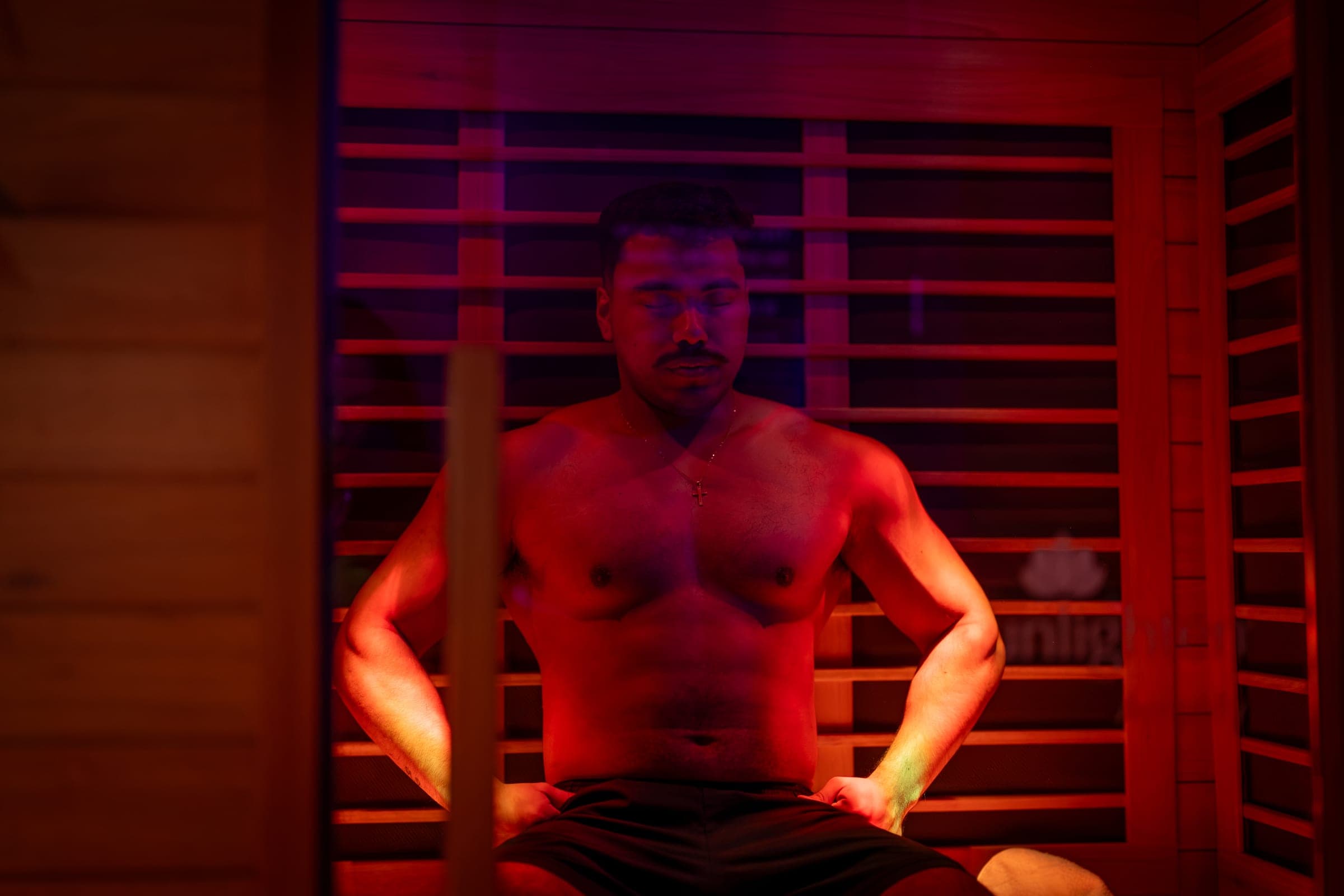
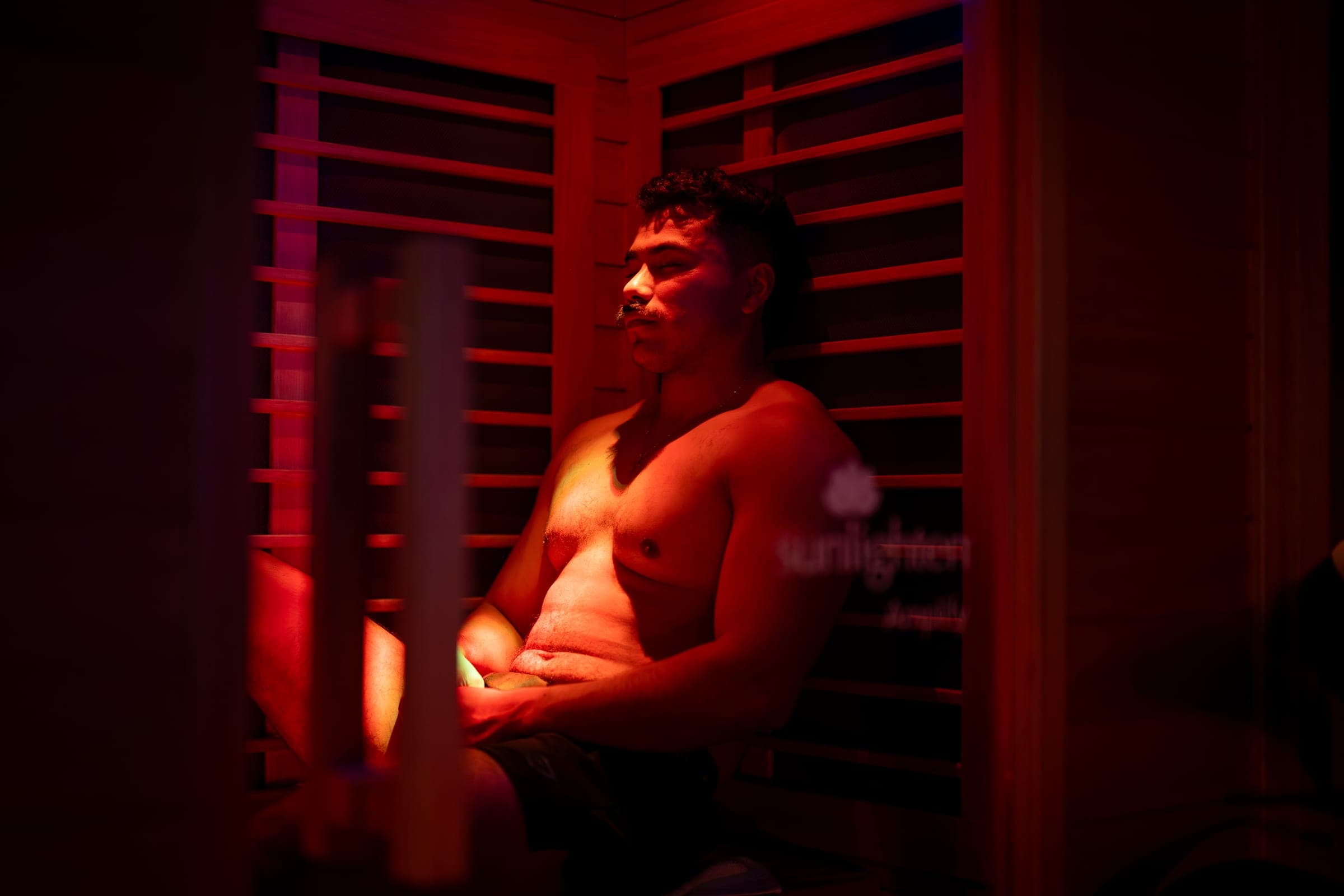
An infrared sauna uses panels that give off infrared heat, a bit like the warmth of the sun on a cool day. It warms you and the surfaces it reaches directly, rather than relying on hot air alone. The air in the cabin still gets warm, just not as hot as a traditional room. More of the warmth comes straight from the panels, so the cabin feels comfortable at a lower air temperature.
How each one feels
Traditional: You open the door and the heat meets you. Breathing feels warmer. Throw water on the rocks and a wave rolls over your shoulders. Rounds tend to be shorter and more intense, and the cool-down between them is part of the ritual.
Infrared: The air is milder when you step in, and the warmth builds from the outside in. Most people sweat freely after a while, though it can take a few minutes longer to get going. Many people find they can settle in, talk or sit quietly for longer. Finnish researchers who tested far-infrared sessions after workouts found they put only a light load on the body and described them as comfortable and relaxing (SpringerPlus, 2015).
Typical temperatures
General ranges, and every room is different:
- Traditional saunas usually run around 150 to 195°F (65 to 90°C), sometimes hotter.
- Infrared saunas usually run cooler, often around 110 to 140°F (43 to 60°C).
Don't compare the numbers too literally. Because so much of the infrared warmth comes from the panels, a cabin can feel warmer than the dial suggests. Our infrared cabins go up to about 170°F, which is on the warm side for infrared.
What research says about each
Both kinds of sauna get you hot, and your body answers in similar ways: your heart rate climbs and blood flow shifts toward your skin to shed heat. In a 2019 study, heart rate and blood pressure during a 25-minute session at about 200°F (93°C) rose to levels that matched moderate exercise, and blood pressure dipped below its starting point afterward (Complementary Therapies in Medicine, 2019).
Where they differ is how much research there is:
- Heart health research is mostly traditional. A Finnish study followed 2,315 men for about 20 years. Those who used a sauna four to seven times a week had about half the rate of fatal cardiovascular disease of men who went once a week (JAMA Internal Medicine, 2015). It's observational, so it shows a strong link rather than proof, and it was done in traditional saunas at roughly 170 to 176°F (77 to 80°C).
- So is the skin research. In a small controlled study, regular sauna users had a steadier skin barrier and better-hydrated skin than non-users after the same 176°F (80°C) sessions (Dermatology, 2008).
- Infrared has smaller, promising studies. Ten men jumped higher 30 minutes after a hard endurance workout when they spent that time in a far-infrared sauna instead of sitting at room temperature (SpringerPlus, 2015). In a Japanese study, two weeks of daily 15-minute sessions in a 140°F (60°C) far-infrared sauna improved a standard measure of blood vessel function in adults with heart risk factors (Journal of the American College of Cardiology, 2001).
- Relaxation and sleep, either way. In a global survey of 482 sauna users, relaxation and stress relief topped the reasons people go, and 83.5% reported sleep benefits (Complementary Therapies in Medicine, 2019).
Who tends to prefer which
You'll probably like a traditional sauna if you love the hit of heat when the door opens, steam on the rocks is your favorite part, and you like short, intense rounds with a cold rinse between.
You'll probably like an infrared sauna if very hot air feels hard to breathe, you want a gentler start (especially if you're new), or you like to settle in for a longer, quieter sit, read or talk with a friend.
If your plan is heat followed by a cold plunge, either works. What matters most is having cold water close by. Here's our take on sauna or plunge first.
Session length and rhythm
In a traditional sauna, people often do rounds of 5 to 15 minutes with a cool-down between. In an infrared cabin, rounds of 15 to 30 minutes are common because the air is milder. These are habits, not rules. Start shorter than you think on your first visit and get out whenever you've had enough. Our guide on how long to stay in the sauna and plunge has more on timing.
A few practical differences: water on the rocks is a traditional-only thing, since an infrared cabin has no rocks and water doesn't belong near the panels. Heat is hard on phones in either, so leave yours outside. And a swimsuit or light shorts works in both; here's what to wear.
What the sauna is like at CBR
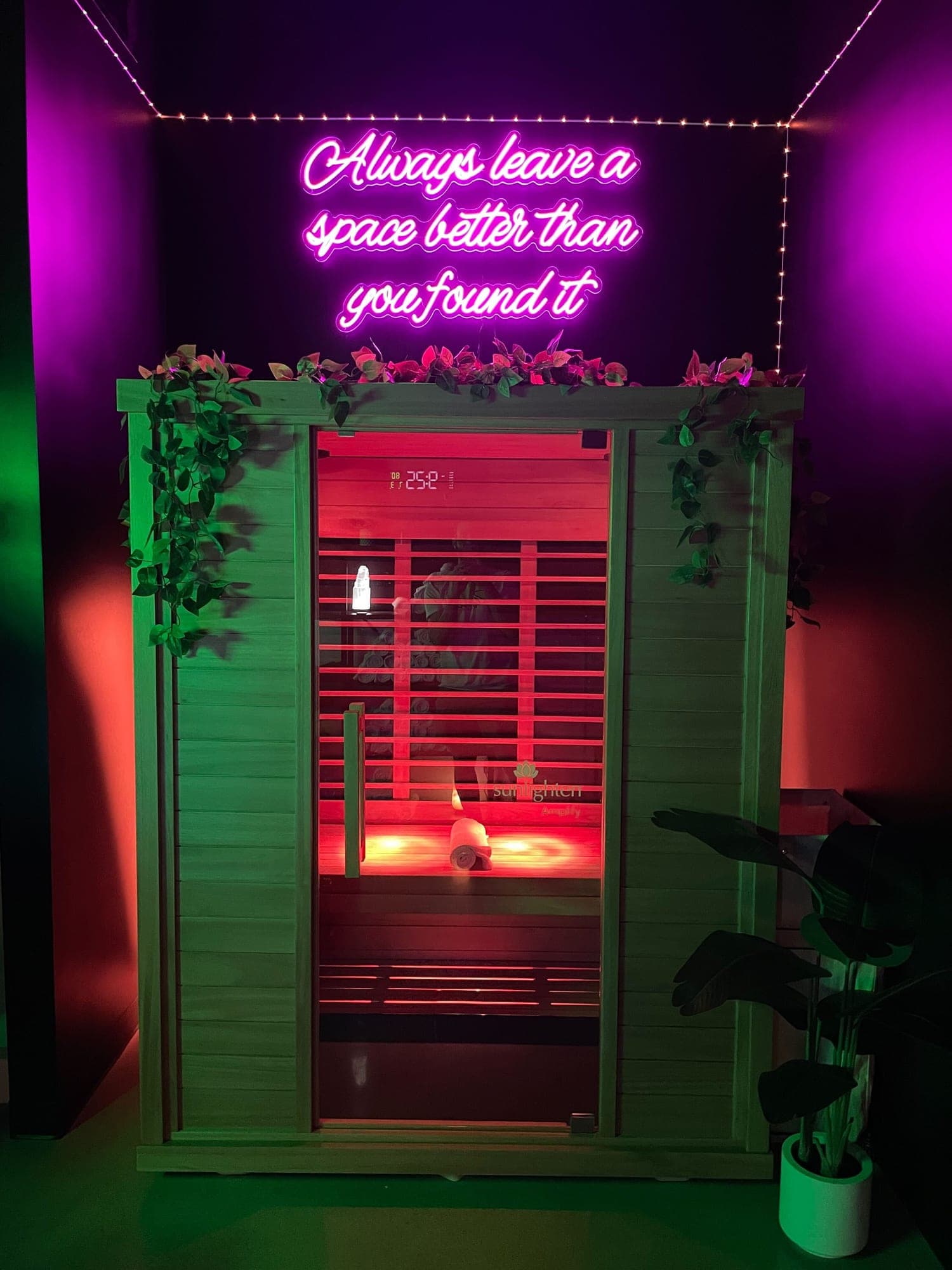
Every CBR suite has an infrared sauna, a cold plunge a few steps away and your own shower. You can change the light color in the sauna with the remote, so the mood is up to you. No steam to manage and no one waiting for your spot. If it's your first time with infrared, read how to prepare for your first infrared session, and see the suite on our infrared sauna page.
Drink water before and after, skip alcohol, and get out if you feel dizzy, lightheaded or unwell. If you are pregnant, have a heart condition or any medical concern, check with your doctor before you go.
Questions people ask.
Is an infrared sauna as hot as a traditional sauna?
Usually not. Infrared cabins often run around 110 to 140°F, while traditional saunas often sit around 150 to 195°F. Infrared warmth comes largely from the panels, so it can feel warmer than the air temperature suggests.
Which has more research behind it?
Traditional saunas, for long-term heart health: the best-known studies followed Finnish adults using traditional saunas for 15 to 20 years. Infrared research is smaller but growing, with studies on post-workout recovery and blood vessel function.
Which is better for beginners?
Many first-timers find infrared easier to start with because the air is milder. Either way, keep the first round short and get out when you've had enough.
Can you pour water on an infrared sauna?
No. There are no rocks to steam, and water doesn't belong near the heating panels. Cool off in the plunge or the shower instead.
Do you sweat in an infrared sauna?
Most people do. It can take a few minutes longer to get going than in a hot traditional room, so give it time.
What kind of sauna does CBR have?
Infrared. Every private suite has an infrared sauna, a cold plunge and a shower, in San Diego and Temecula.
Sources
- Mero A, Tornberg J, Mäntykoski M, Puurtinen R. Effects of far-infrared sauna bathing on recovery from strength and endurance training sessions in men. SpringerPlus, 2015. DOI
- Ketelhut S, Ketelhut RG. The blood pressure and heart rate during sauna bath correspond to cardiac responses during submaximal dynamic exercise. Complementary Therapies in Medicine, 2019. PubMed
- Laukkanen T, Khan H, Zaccardi F, Laukkanen JA. Association between sauna bathing and fatal cardiovascular and all-cause mortality events. JAMA Internal Medicine, 2015. PubMed
- Kowatzki D, et al. Effect of regular sauna on epidermal barrier function and stratum corneum water-holding capacity in vivo in humans: a controlled study. Dermatology, 2008. PubMed
- Imamura M, et al. Repeated thermal therapy improves impaired vascular endothelial function in patients with coronary risk factors. Journal of the American College of Cardiology, 2001. PubMed
- Hussain JN, Greaves RF, Cohen MM. A hot topic for health: results of the Global Sauna Survey. Complementary Therapies in Medicine, 2019. PubMed