Quick answer
- Direct studies of saunas and lymph drainage are scarce, so we can't promise a drainage effect. Lymph moves through the vessels' own pumping and the squeezing of nearby tissue.
- An infrared sauna is slow, dry warmth that gets your blood moving. A cold plunge is a sharp cold that tightens blood vessels and sharpens alertness.
- Alternating the two creates big swings in blood flow, and contrast water therapy eased soreness after exercise in a review of 18 trials.
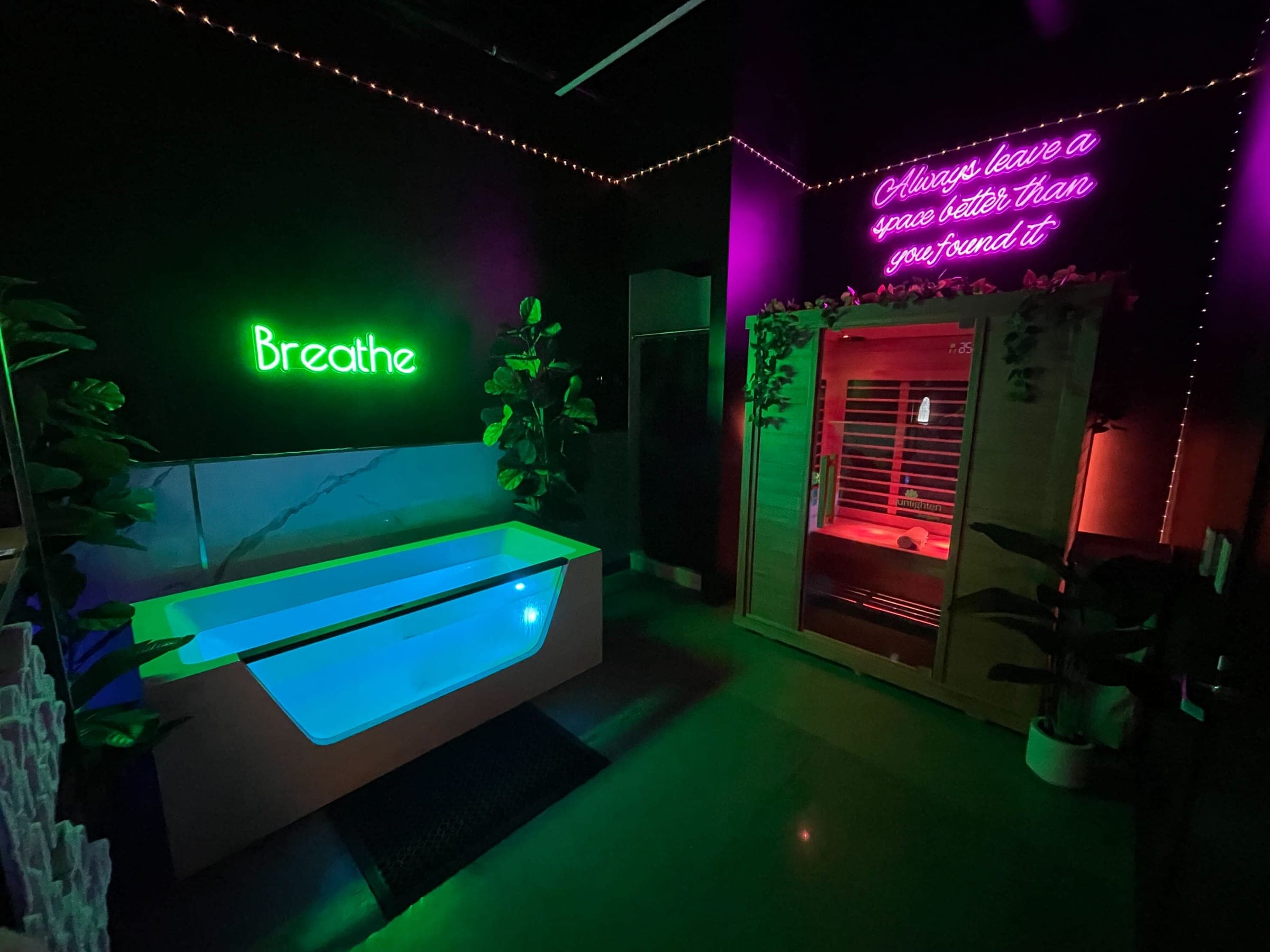
- In a CBR suite you don't have to choose: the sauna, the plunge and a shower share one private room.
In this article · 7 sections
Infrared sauna vs cold plunge is less a contest than a pairing. One is slow, dry warmth that opens you up. The other is a sharp cold that tightens everything and wakes you up. They push your circulation in opposite directions, which is exactly why so many people use both.
Here's how each one feels, what research shows about blood flow and fluid movement, what's known about the lymphatic system, and how to choose.
How an infrared sauna feels, and what it does
An infrared sauna is dry, steady heat. You feel it on your skin first, then deeper, and after a few minutes you start to sweat. Nothing about it is sudden. You sit back, lean against the wall and let time slow down.
Meanwhile your circulation goes to work. In 102 adults with heart risk factors, a single 30-minute sauna lowered blood pressure and arterial stiffness right afterward (Journal of Human Hypertension, 2018). In a small study of infrared heat specifically, two weeks of daily sessions improved blood vessel function in 25 men with heart risk factors (Journal of the American College of Cardiology, 2001).
Our infrared saunas run up to about 170°F. A first round is usually 10 to 15 minutes.
Good for: winding down, quiet time, a slow start to the morning, a conversation with a friend.
How a cold plunge feels, and what it does
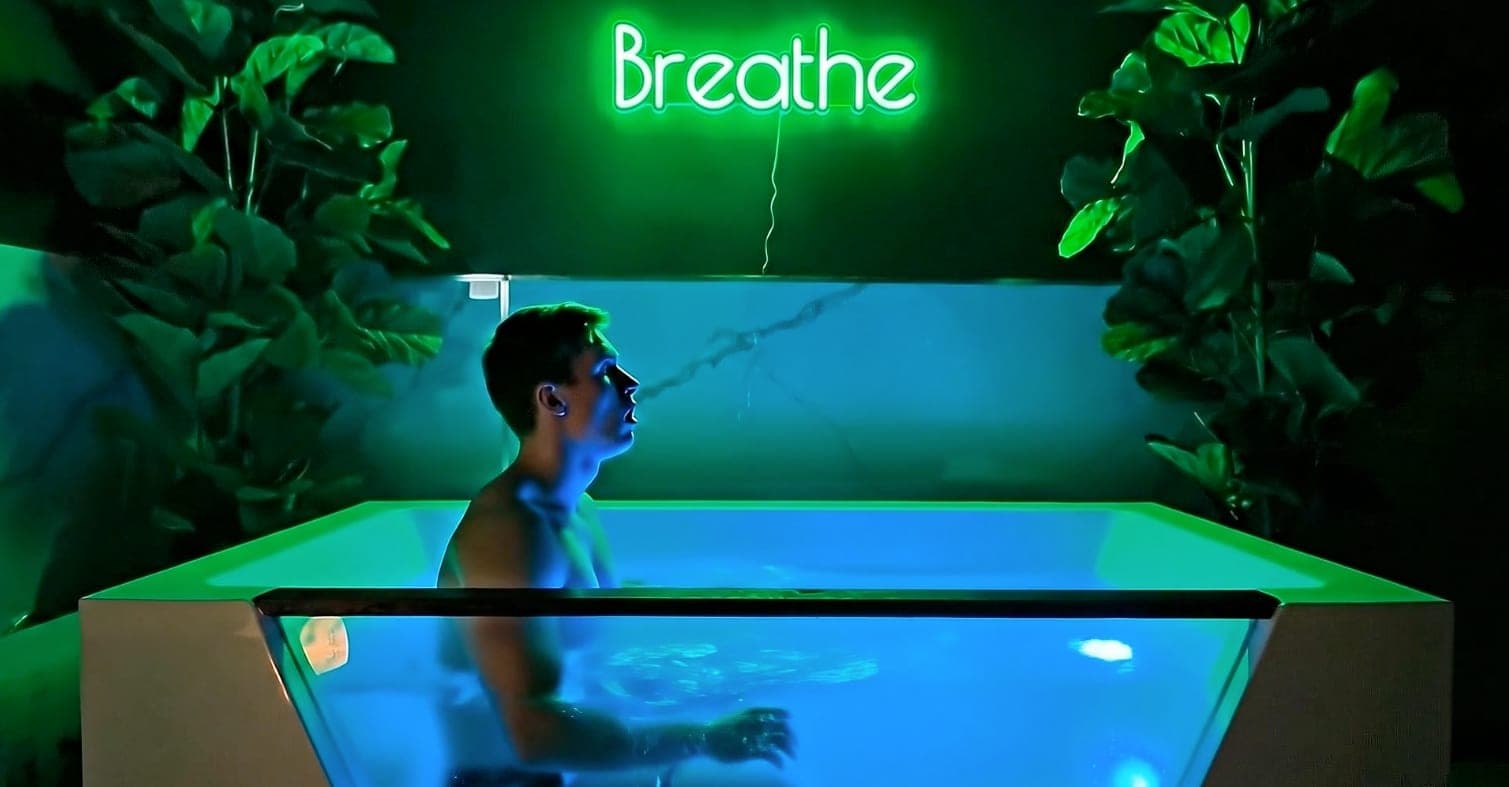
The cold plunge is the opposite. Water pulls heat away far faster than air does, so the cold hits all at once. Your breath catches, your skin stings, and then, if you keep breathing slowly, it settles into something close to calm.
Cold sends a jolt through your system. In one study, an hour in 57°F water raised noradrenaline by 530% and dopamine by 250% (European Journal of Applied Physiology, 2000). Even a gentler 5-minute dip at 68°F left people feeling more active, alert and attentive (Biology, 2023). The water itself plays a part too: its pressure shifts fluid within the body and may reduce muscle swelling after exercise, one reason immersion is studied for recovery (Sports Medicine, 2006).
Our plunges are kept at 45 to 49°F. A first plunge is about 30 seconds. With practice, 1 to 3 minutes is common.
Good for: a jolt when you're dragging, cooling off after a hot day or a hard workout, practicing calm when everything in you wants to get out.
Infrared sauna vs cold plunge, side by side
| Infrared sauna | Cold plunge | |
|---|---|---|
| Feels like | Slow, dry, enveloping | Sudden, sharp, bracing |
| Typical time | 10 to 20 min a round | 30 sec to 3 min |
| Hardest part | Knowing when to stop | The first 20 seconds |
| Afterward | Warm and unhurried | Wide awake and tingling |
| Learning curve | Easy from day one | Easier every visit |
What about lymphatic drainage?
Your lymphatic system collects fluid that seeps out of your blood vessels and returns it to your bloodstream. It has no central pump like your heart. Lymph moves thanks to the rhythmic pumping of the lymph vessels themselves, which have their own muscle cells and one-way valves, plus squeezing from the tissue around them (Annual Review of Fluid Mechanics, 2018; Microvascular Research, 2014).
Here's where the evidence stands. Heat and cold clearly change blood flow, and alternating them amplifies the swings: in 20 adults, contrast therapy using infrared heat and cold therapy produced bigger changes in forearm blood flow than classic hot and cold water baths (Medical Science Monitor, 2020). But studies that directly measure whether a sauna or cold plunge boosts lymph flow in healthy people are scarce, so we can't promise a drainage effect. Movement helps lymph along too, so walking, stretching and training all count. If you have lymphedema, have had lymph nodes removed or have any lymphatic condition, talk to your doctor before using heat or cold.
How to choose
- Want to unwind? Start with the sauna.
- Want to feel awake? Start with the plunge, or end your sauna round with one.
- Nervous about the cold? Do a round in the sauna first, then try 30 seconds in the plunge. Warm skin makes the first dip feel like a choice instead of an ambush.
- Not a fan of heat? Keep sauna rounds short and spend more of your session cooling off.
- Coming from training? Both work. See contrast therapy before or after a workout for how to fit them in.
Which one goes first is its own question, answered in cold plunge or sauna first.
Why so many people end up doing both
Going back and forth between the two is called contrast therapy: heat, then cold, then heat again. Athletes have used it for years, and research backs the habit: a review of 18 trials found contrast water therapy reduced muscle soreness and strength loss after hard exercise compared with resting (PLoS One, 2013). It also just feels good. The sauna makes the plunge feel possible, and the plunge makes the next round of heat feel like a reward.
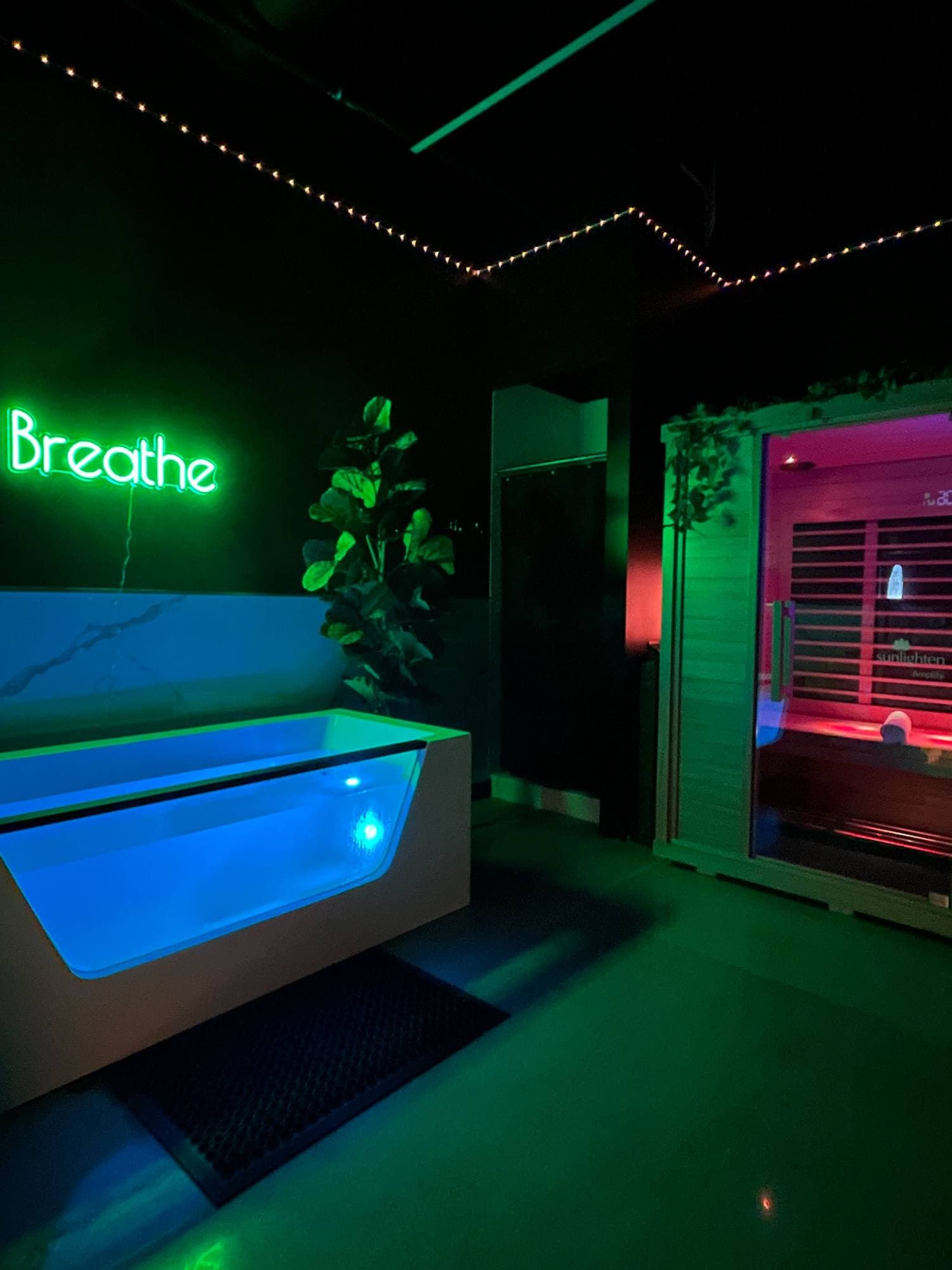
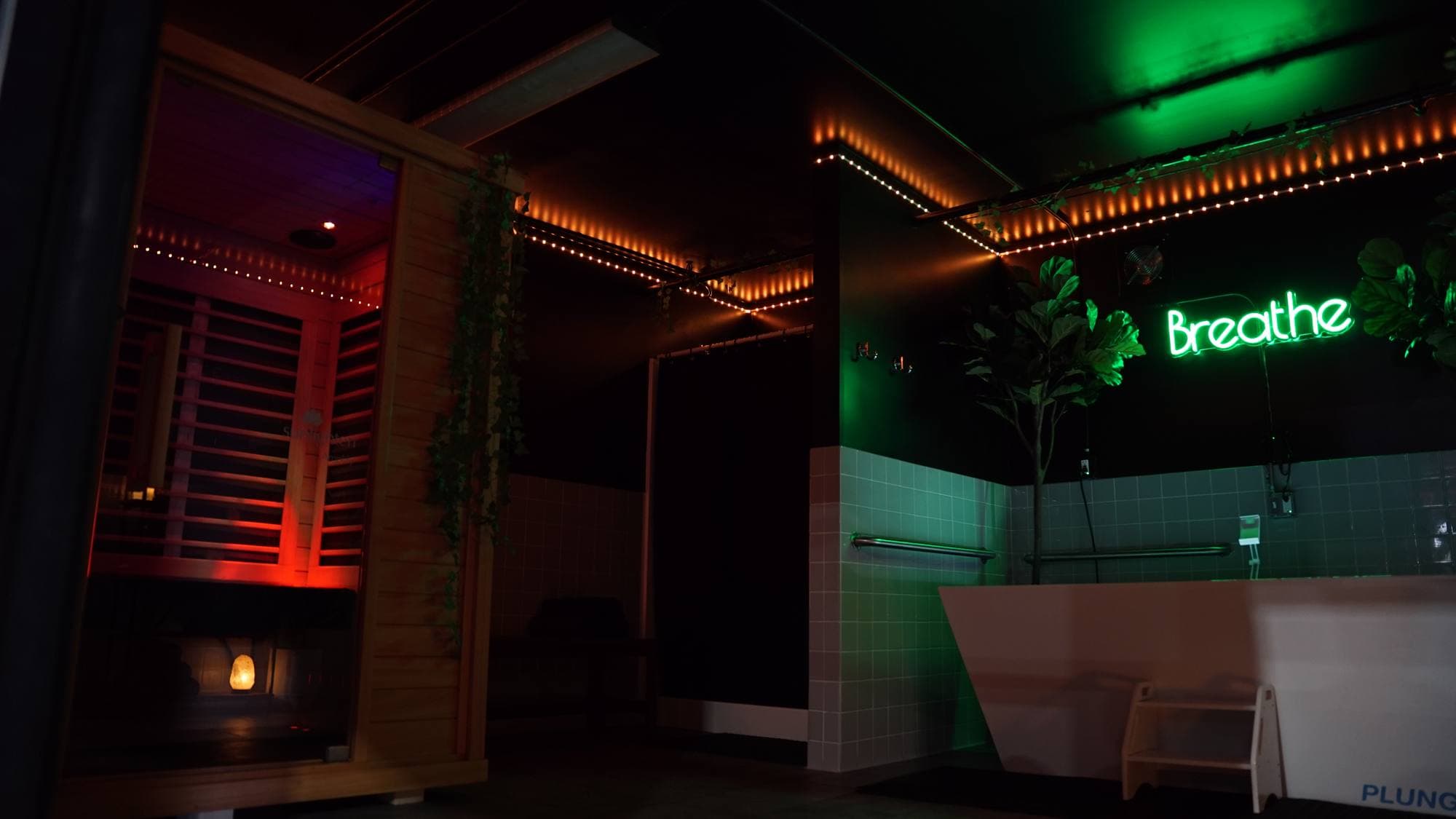
In a CBR suite, the infrared sauna and the cold plunge are a few steps apart, with a private shower in the same room. Book contrast therapy in San Diego or contrast therapy in Temecula.
Before you try either one
Heat and cold both put real demands on your body. Check with your doctor first if you're pregnant, have a heart or circulation condition, high blood pressure or Raynaud's, or have any other medical concern. Start short, and get out of either one if you feel dizzy, numb or unwell.
Questions people ask.
Is an infrared sauna or a cold plunge better?
Neither. They work in opposite directions: heat gets your blood moving, while cold tightens blood vessels and sharpens alertness. Plenty of people like them best together.
Does a sauna help with lymphatic drainage?
Direct studies are scarce, so we can't promise it. Research does show that heat changes blood flow, and that lymph moves with the vessels' own pumping and the squeezing of nearby muscle. If you have a lymphatic condition, ask your doctor first.
Does a cold plunge help lymphatic drainage?
There's no direct evidence for that either. Water pressure does shift fluid in the body, which is one reason immersion is studied for recovery. Ask your doctor first if you have a lymphatic condition.
Which should a beginner try first?
The sauna is usually the easier place to start. Do a round of heat, then try 30 seconds in the plunge if you're curious.
How hot is the sauna and how cold is the plunge?
Our infrared saunas run up to about 170°F, and the plunges are kept at 45 to 49°F.
Sources
- Laukkanen T, et al. Acute effects of sauna bathing on cardiovascular function. Journal of Human Hypertension, 2018.
- Imamura M, et al. Repeated thermal therapy improves impaired vascular endothelial function in patients with coronary risk factors. Journal of the American College of Cardiology, 2001.
- Šrámek P, et al. Human physiological responses to immersion into water of different temperatures. European Journal of Applied Physiology, 2000.
- Yankouskaya A, et al. Short-term head-out whole-body cold-water immersion facilitates positive affect and increases interaction between large-scale brain networks. Biology, 2023.
- Wilcock IM, Cronin JB, Hing WA. Physiological response to water immersion: a method for sport recovery? Sports Medicine, 2006.
- Moore JE Jr, Bertram CD. Lymphatic system flows. Annual Review of Fluid Mechanics, 2018.
- Breslin JW. Mechanical forces and lymphatic transport. Microvascular Research, 2014.
- Kim J, Jung H, Yim J. Effects of contrast therapy using infrared and cryotherapy as compared with contrast bath therapy on blood flow, muscle tone, and pain threshold in young healthy adults. Medical Science Monitor, 2020.
- Bieuzen F, Bleakley CM, Costello JT. Contrast water therapy and exercise induced muscle damage: a systematic review and meta-analysis. PLoS One, 2013.