

How Contrast Therapy Reduces Inflammation After Workouts

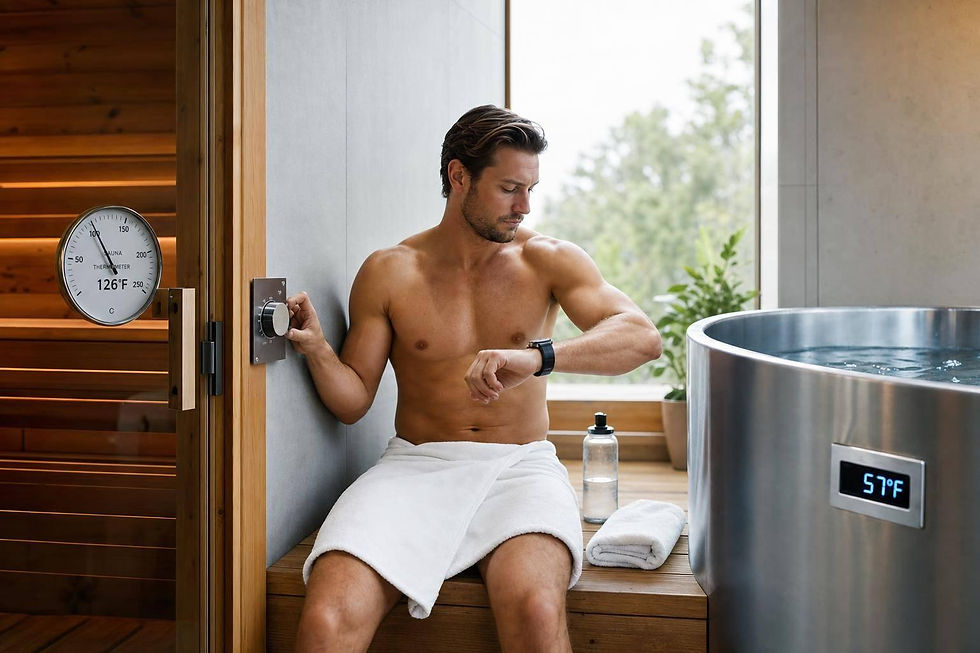
Contrast therapy - alternating between heat and cold exposure - can help reduce inflammation, ease soreness, and improve recovery after workouts. Here's how it works:
Alternating Heat and Cold: Hot exposure dilates blood vessels, increasing circulation and delivering nutrients. Cold exposure constricts vessels, reducing swelling and numbing pain.
Flushes Out Waste: This "vascular pumping" effect removes lactic acid and other inflammatory markers while promoting tissue repair.
Science-backed benefits: Studies show it reduces muscle soreness (DOMS), clears inflammation markers, and improves muscle recovery compared to rest alone.
Additional Perks: Boosts flexibility, supports immune function, and enhances energy levels through temperature-driven physiological responses.
To try it, alternate between heat (e.g., sauna) and cold (e.g., ice bath) in cycles, starting 1–2 hours post-workout. Always consult a doctor if you have medical conditions or concerns.
Stay INJURY FREE And Get FASTER?! Experiments With Contrast Therapy (My Routine)
sbb-itb-10d9b3e
What Happens During Post-Workout Inflammation
When you push through an intense workout, your muscle fibers sustain tiny tears. This sets off an inflammatory cascade - your body’s natural way of ramping up metabolic activity and detoxification and kickstarting the immune system to repair the damage.
How Inflammation Aids Muscle Recovery
Inflammation plays a vital role in muscle recovery and growth. It increases blood flow to the damaged muscles, delivering oxygen and essential nutrients that fuel the repair process. This immune response helps your muscles adapt, rebuild, and ultimately become stronger. Without this response, the progress you’re striving for wouldn’t be possible. But if inflammation gets out of hand, it can actually slow down recovery.
When Inflammation Becomes a Problem
Trouble starts when inflammation becomes excessive or lingers too long. Instead of helping, it can stall your recovery. For example, you might experience Delayed Onset Muscle Soreness (DOMS), which typically peaks 24–48 hours after a workout. If the pain and stiffness persist, it’s a sign that the inflammatory response is overactive.
"Inflammation is a double-edged sword. After exercise, a certain amount of inflammation is necessary for muscle repair and adaptation. But chronic or excessive inflammation can lead to pain, stiffness, and delayed recovery." – Awaken For Wellness
Too much inflammation can also interfere with proprioception - your body’s ability to sense movement and position. This increases the risk of re-injury and makes returning to intense training more difficult. Using a recovery goals checklist can help you monitor these signs and adjust your routine. If soreness or fatigue lasts beyond 48 hours, it’s a red flag that inflammation is no longer helping your recovery.
The Science Behind Contrast Therapy and Inflammation Reduction
Contrast therapy involves alternating between hot and cold exposure, creating a strong physiological reaction in your blood vessels. This process generates a vascular "pumping" effect, which helps flush out inflammatory waste - like lactic acid and other markers - while delivering fresh oxygen and nutrients to aid tissue repair.
How Blood Vessels React to Temperature Shifts
When you step into an infrared sauna set between 120–150°F, your blood vessels dilate (expand). This vasodilation boosts blood flow to your muscles by 4 to 7 times compared to normal levels. As nutrient-rich blood flows to the surface, tight muscles relax, and circulation pathways open up.
Switching to cold water immersion at 45–55°F triggers the opposite reaction - your blood vessels constrict (narrow). This constriction reduces blood flow to the area, helping to control swelling and numb pain. Many athletes find success by tracking recovery progress to optimize these physiological benefits. The alternating dilation and constriction effectively flush out metabolic waste and support tissue repair. This cycle promotes better tissue perfusion and enhances cellular repair processes.
Enhanced Circulation and Oxygen Delivery to Muscles
The vascular response from contrast therapy doesn’t just clear out toxins - it also increases oxygen delivery, which is critical for repairing damaged muscles. Studies show that contrast therapy can achieve tissue perfusion levels of 18.71 PU (perfusion units), compared to just 3.69 PU with cold therapy alone.
On top of improving circulation, contrast therapy activates heat shock proteins (HSPs) and cold shock proteins (RBM3). HSPs repair damaged proteins and protect mitochondria, while RBM3 supports brain and synaptic health. Cold exposure also boosts norepinephrine levels by 530%, which helps reduce inflammation and strengthens the body’s stress response.
Research Studies on Contrast Therapy for Inflammation
Scientific studies show that contrast therapy can effectively reduce both muscle soreness and underlying inflammation.
Research on Muscle Soreness and Swelling Reduction
A network meta-analysis of 57 studies involving 1,220 participants identified Contrast Water Therapy as the most effective method for reducing Creatine Kinase (CK) - a key biochemical marker of muscle damage and inflammation. It achieved a SUCRA score of 79.9%, significantly outperforming passive rest and other recovery methods.
In September 2024, researchers at Provita Medical Center in Poland conducted a randomized trial with 40 combat sports athletes. The athletes underwent 20-minute contrast therapy sessions using the Game Ready device, alternating between 1-minute cycles of cold water at 37.4°F (3°C) and hot therapy at 113°F (45°C). Results showed that the contrast therapy group achieved tissue perfusion levels of 18.71 perfusion units (PU) immediately after treatment - almost double the 9.79 PU recorded in the control group. Even 24 hours later, the contrast therapy group maintained higher perfusion levels at 10.93 PU.
In February 2026, Rene Barbier from St. Mary’s University led a study comparing contrast therapy - alternating between a sauna at 176°F (80°C) and cold plunges at 55.4°F (13°C) - to heat-only sessions. Both methods increased the inflammatory marker IL-6 to a similar extent. However, the contrast therapy group had a final heart rate of 105 bpm, which was 46 beats lower than the 151 bpm recorded in the heat-only group. As Barbier stated, "This study showed that contrast therapy elicits a similar acute inflammatory response compared with sauna therapy, while it leads to more positive perceptual responses".
These findings highlight the unique physiological benefits of contrast therapy.
How Contrast Therapy Compares to Rest Alone
When directly compared to passive recovery, contrast therapy shows clear advantages. It significantly reduces muscle soreness (DOMS) and clears Creatine Kinase more effectively. A network meta-analysis reported a standardized mean difference of –0.52 for DOMS reduction and –0.45 for CK clearance when compared to passive rest.
The alternating vasoconstriction and vasodilation in contrast therapy creates a "pumping effect" that helps remove inflammatory fluids from tissues - a benefit passive rest cannot provide. Additionally, athletes have reported improved thermal comfort and a greater sense of recovery quality when using contrast therapy over passive recovery methods.
These insights offer valuable guidance for optimizing recovery strategies.
How to Use Contrast Therapy After Your Workouts
When and How Often to Do Contrast Therapy
Start contrast therapy within 1–2 hours after finishing your workout to target inflammation when it begins to set in. This timing helps optimize the vascular pumping effect, which supports recovery.
After particularly intense workouts, give your body at least 90 minutes to stabilize before beginning contrast therapy. Jumping into temperature changes too quickly after strenuous exercise can interfere with the recovery process.
For most athletes, 2–4 sessions per week are ideal. If you're doing a session during the day, always end with a cold cycle to reduce inflammation and leave you feeling more energized.
Recommended Temperatures and Session Lengths
The best approach follows a 4:1 ratio of heat to cold. This means spending 3–4 minutes in heat, followed by 1 minute in cold, and repeating the cycle 4–6 times for a total of 20–30 minutes. The exact temperature and duration will depend on your experience level, as saunas and cold plunges boost recovery through different physiological mechanisms.
Here's a quick guide tailored to different skill levels:
Level | Heat Duration | Cold Duration | Sauna Temp | Cold Plunge Temp | Cycles |
Beginner | 8–10 min | 30–90 sec | 150–170°F (65–77°C) | 50–59°F (10–15°C) | 1–2 |
Intermediate | 10–15 min | 2–3 min | 170–185°F (77–85°C) | 45–55°F (7–13°C) | 2–3 |
Advanced | 15–20 min | 3–5 min | 185–195°F (85–90°C) | 39–45°F (4–7°C) | 3–5 |
If you're just starting out, take it slow and gradually increase the time you spend in cold water. At home, you can try a contrast shower by alternating 2–4 minutes of hot water with 30–60 seconds of cold water, repeating for 3–5 cycles.
Safety Guidelines and Who Should Avoid It
Although contrast therapy is a powerful recovery tool, safety should always come first. If you have any medical conditions, such as heart disease, uncontrolled high blood pressure, Raynaud's phenomenon, or peripheral neuropathy - or if you're pregnant - consult a doctor before trying it. The rapid changes in temperature can put extra strain on your heart.
"The sudden expansion and constriction of blood vessels can put additional strain on the heart" – Dr. Babak Shadgan, University of British Columbia
Avoid using contrast therapy if you have open wounds, burns, skin infections, or active eczema. Additionally, give yourself 24–48 hours after an acute injury (like a severe sprain) before attempting this therapy, as it could worsen swelling during the initial stages.
Be mindful of how your body feels during a session. Stop immediately if you notice chest pain, dizziness, confusion, or difficulty warming back up. Contrast therapy should feel invigorating but never dangerous. By following these precautions, you can safely enjoy its recovery benefits while minimizing any potential risks.
Other Health Benefits of Contrast Therapy
Contrast therapy does more than just reduce inflammation - it also supports recovery by improving muscle function, increasing flexibility, and boosting overall energy levels.
Faster Muscle Recovery and Improved Flexibility
Contrast therapy helps preserve muscle strength and speeds up recovery after intense workouts. This is thanks to the vascular pump, which efficiently removes metabolic waste while supplying oxygen to overworked muscles. It’s a more effective approach than simply resting.
The heat phase contributes by enhancing tissue elasticity and loosening tight muscles, which can significantly improve your range of motion. Heat also encourages the production of synovial fluid in your joints, helping to reduce stiffness and promote joint health.
Increased Energy and Immune Support
Beyond aiding muscle recovery, contrast therapy can also elevate energy levels and strengthen your immune system. Cold immersion triggers a surge in norepinephrine (200–300%) and dopamine (about 250%), with these elevated levels lasting for hours [2,14]. The result? Mental clarity, sharper focus, and sustained energy long after your session ends.
On the other hand, heat exposure increases the production of heat shock proteins by up to 48%, while consistent cold exposure builds resilience to stress and reduces work absences due to illness by 29% [14,15]. Together, these thermal shifts help train your autonomic nervous system to seamlessly switch between stress and recovery modes.
If you’re ready to experience the benefits of contrast therapy for yourself, check out Conscious Body Recovery for personalized sessions designed to enhance recovery, energy, and overall well-being.
Conclusion
Contrast therapy is a well-established approach for easing post-workout inflammation by alternating between heat and cold. This process triggers vasodilation and vasoconstriction, which help speed up recovery and reduce muscle soreness. The result? Quicker recovery times, less discomfort, and better muscle performance.
But the benefits don’t stop there. Contrast therapy can also contribute to overall well-being by increasing energy levels, supporting the immune system, and enhancing flexibility. A simple cycle of heat and cold delivers recovery advantages that go beyond just reducing inflammation.
If you’re ready to see these benefits for yourself, consider a personalized session. Conscious Body Recovery offers private contrast therapy sessions in San Diego, featuring infrared saunas and cold plunges for a tailored recovery experience designed to meet your needs.
Adding contrast therapy to your routine can amplify the recovery benefits discussed in this article. Whether you opt for a quick 25-minute Silver session to recharge between workouts or a longer 55-minute Gold session for deeper therapeutic care, you’ll feel the difference. Incorporate contrast therapy into your post-workout plan to boost recovery, energy, and performance. It’s a simple yet effective way to reduce inflammation while helping you feel and perform at your best.
FAQs
Can contrast therapy slow muscle growth?
Contrast therapy doesn't interfere with muscle growth. Instead, it aids recovery by helping to reduce soreness and inflammation. However, to support muscle repair and growth, it's best to wait 4–6 hours after training before using cold therapy. This delay allows the natural inflammation process, which is crucial for muscle development, to occur. By timing it right, you can enjoy the benefits of both recovery and muscle building.
What’s the best heat/cold order for recovery?
For the best recovery results, begin with heat, like an infrared sauna, to help relax your muscles and improve circulation. Afterward, switch to cold therapy, such as a cold plunge, to minimize inflammation and swelling. Repeating this cycle 2-3 times can enhance the overall effects.
How do I know if I’m overdoing contrast therapy?
Overdoing contrast therapy can lead to some noticeable red flags. Watch out for abnormal skin sensations, issues with circulation, open wounds, or sensitivity to cold. If you experience cardiac problems like angina, it's a clear sign to pause. Other symptoms to be mindful of include persistent discomfort, dizziness, fatigue, or skin irritation.
For most people, a good routine involves 2-3 sessions per week, alternating between hot (3-5 minutes) and cold (1-3 minutes) phases. The key is to pay attention to how your body feels. If something doesn’t seem right, don’t hesitate to consult a healthcare professional.


Comments