Quick answer
- Slow breathing with long exhales is linked in research to feeling more relaxed, comfortable and alert.
- Guided imagery increased relaxation in a randomized study, and a quiet sauna is a great place to practice it.
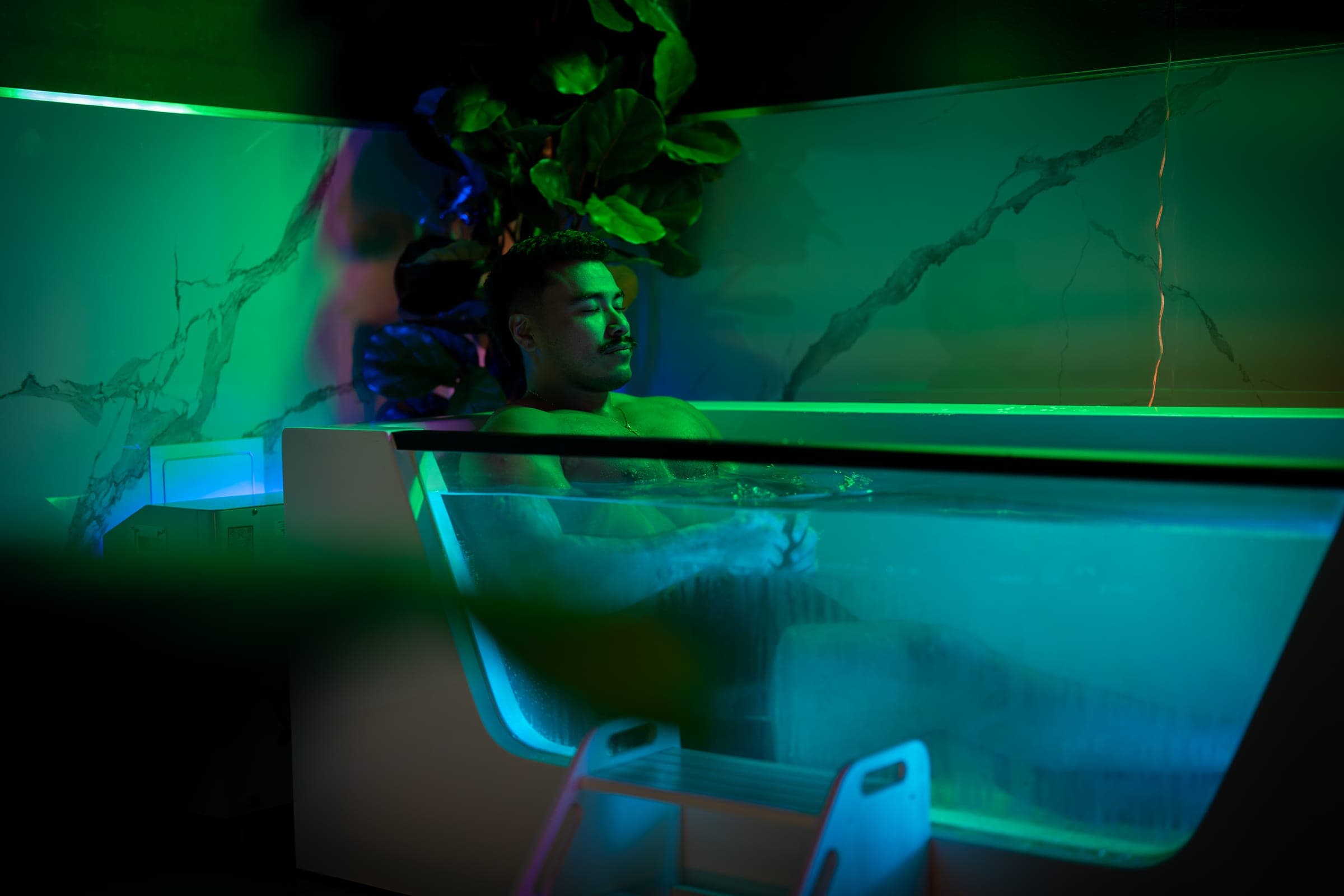
- Before the plunge, picture getting in calmly, then breathe out long as you sit down.
- Never hold your breath or breathe fast in cold water. Slow and steady is the whole technique.
In this article · 7 sections
Visualization and slow breathing are two of the simplest tools for calm and focus, and a sauna is one of the best places to practice them: warm, quiet and private. Below is a five-step visualization routine for the heat, a short plan for the cold, and what the research says about why these habits help. We use them for focus and calm. They're not a treatment for any condition.
What the research says
- Slow breathing. A systematic review of 15 studies found that breathing slower than 10 breaths a minute is linked to feeling more relaxed, comfortable and alert, with less anxiety and anger, along with higher heart rate variability (Frontiers in Human Neuroscience, 2018).
- Long exhales. In a month-long randomized study, five minutes a day of breathing that stretches the exhale improved mood more than the same time spent in mindfulness meditation (Cell Reports Medicine, 2023).
- Guided imagery. In a randomized study of 60 students, 20 minutes of guided imagery increased relaxation compared with a control group, as did deep breathing and muscle relaxation (Evidence-Based Complementary and Alternative Medicine, 2021).
- The quiet after heat. In 93 adults, heart rate settled below its starting level during a 30-minute cool-down after a sauna, with heart rate variability rising (Complementary Therapies in Medicine, 2019).
What we mean by visualization
Visualization just means holding a picture in your mind on purpose. A lifter pictures a clean rep before picking up the bar. A swimmer pictures the turn before the race. You're giving your attention a steady place to rest, so it doesn't spin. Think of it as daydreaming, steered.
Before you start
- Phone away. In your bag, on do not disturb.
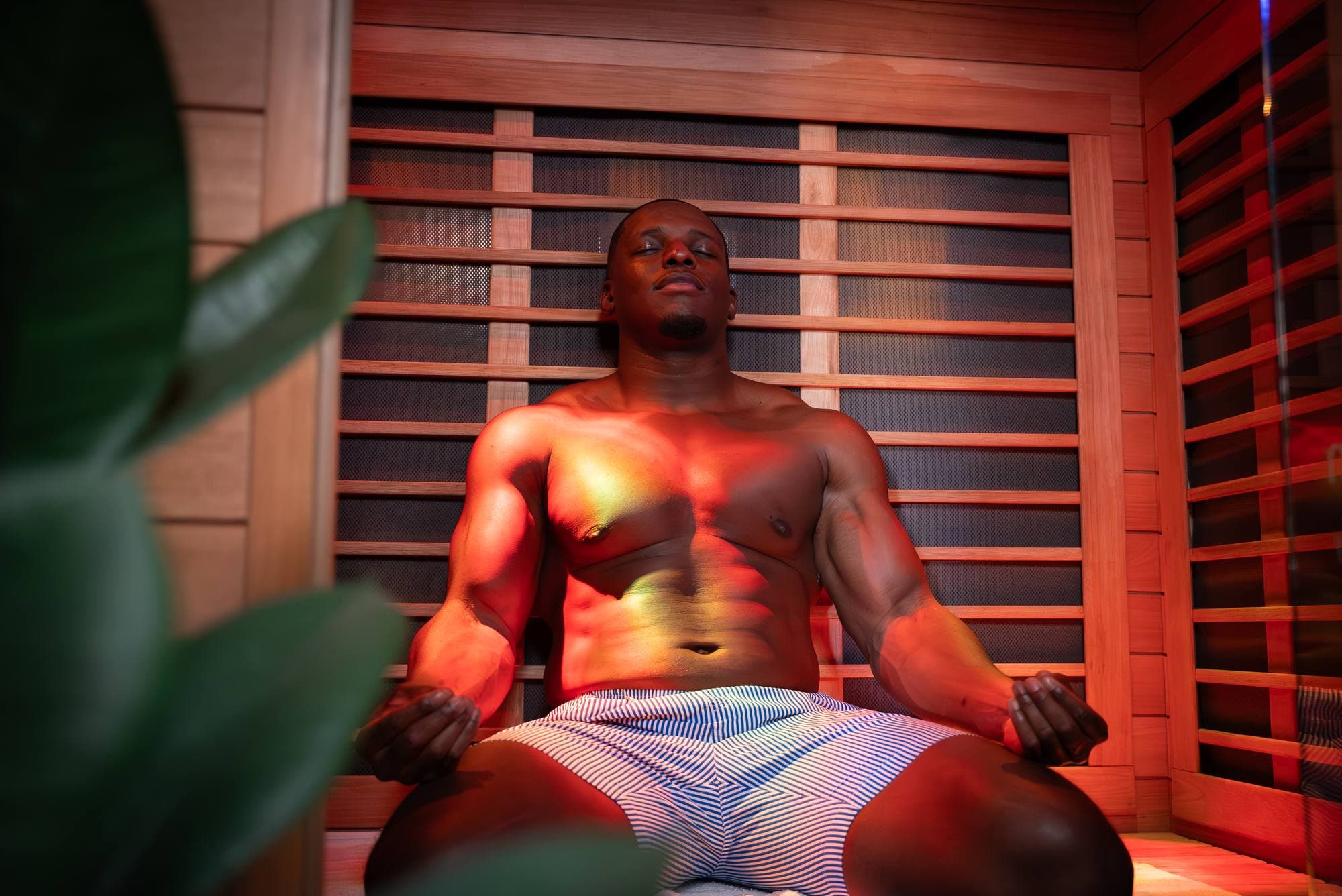
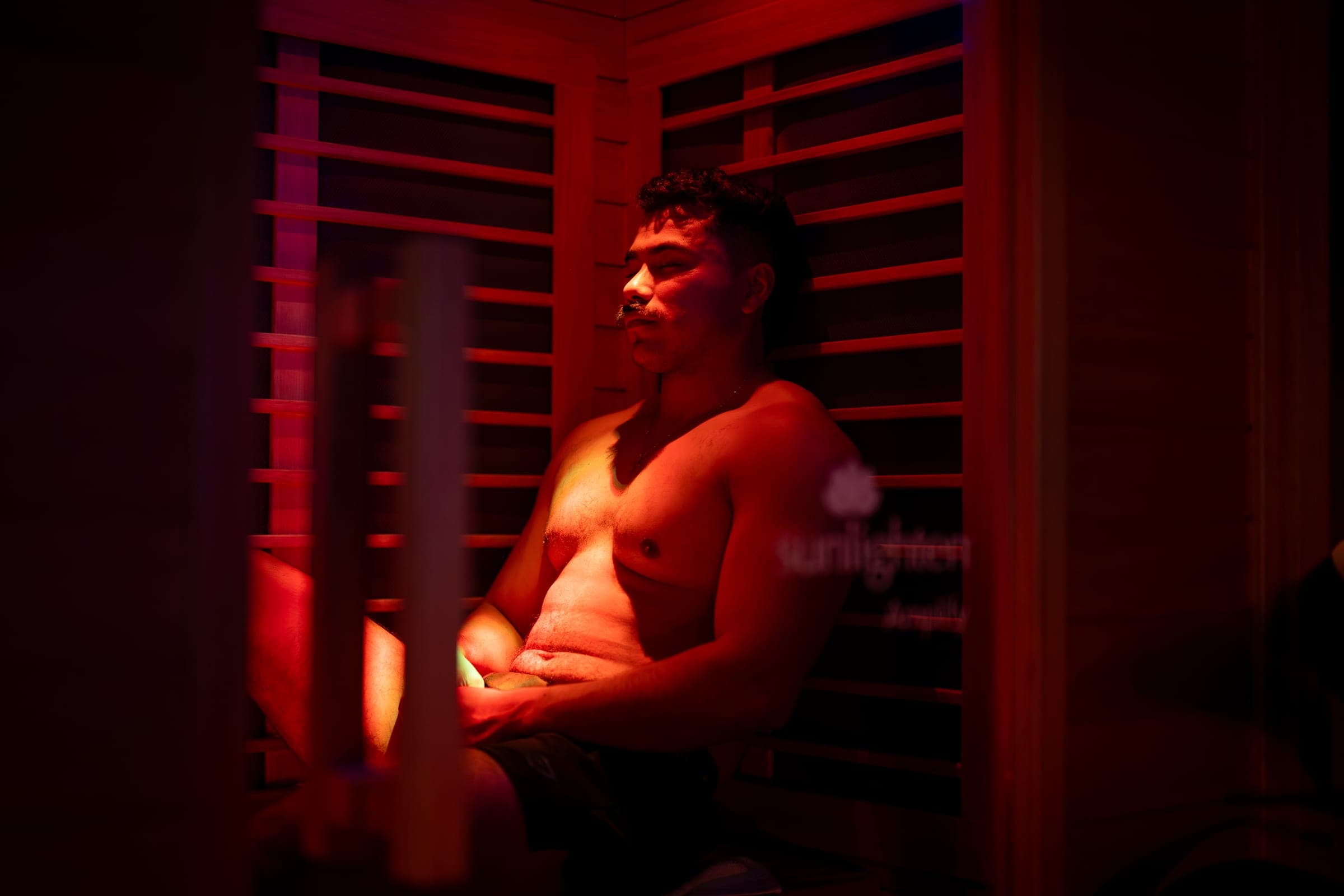
- Set the light. The sauna light changes color with the remote. Pick something easy on the eyes.
- Decide your time first. Know how long your round will be before you sit down, so you're not doing math with your eyes closed.
- Get comfortable. Back against the wall, feet flat, hands loose on your legs.
In the sauna: a five-step visualization routine
1. Settle your breath (1 to 2 minutes)
Breathe in through your nose for a count of four. Breathe out for a count of six. Longer out than in. If the counts feel tight in the heat, shorten both. The point is a slow, even rhythm, not a number.
2. Scan your body (2 minutes)
Start at your forehead and move down slowly: jaw, shoulders, hands, stomach, legs, feet. At each stop, notice what's there. Warmth, tightness, sweat. You don't have to fix anything. Notice it and move on.
3. Pick one image (3 to 5 minutes)
Choose something calm and simple. A beach at dusk. A slow river. A favorite trail early in the morning. Fill in the details: what you'd see, hear and feel there. When your mind wanders, and it will, notice that it wandered and come back to the picture. Coming back is the practice.
4. Rehearse the plunge (1 minute)
Near the end of your round, picture the next few minutes. Standing up slowly. Walking to the plunge. Stepping in, sitting down, breathing out long. See yourself doing it calmly. It's a rehearsal, so the real thing feels familiar.
5. Come back (30 seconds)
Open your eyes, look around the room and stand up slowly.
Before and in the cold plunge
The cold is where your breath most wants to run. The gasp and fast breathing of the first moments in cold water is a reflex called cold shock, one of the risks a 2017 review of cold water immersion lays out (Experimental Physiology, 2017). A simple plan helps.
- Before you get in: two slow breaths with long exhales. Picture yourself already sitting in the water, calm.
- Getting in: breathe out as you lower yourself down. It's hard to gasp in the middle of a long exhale.
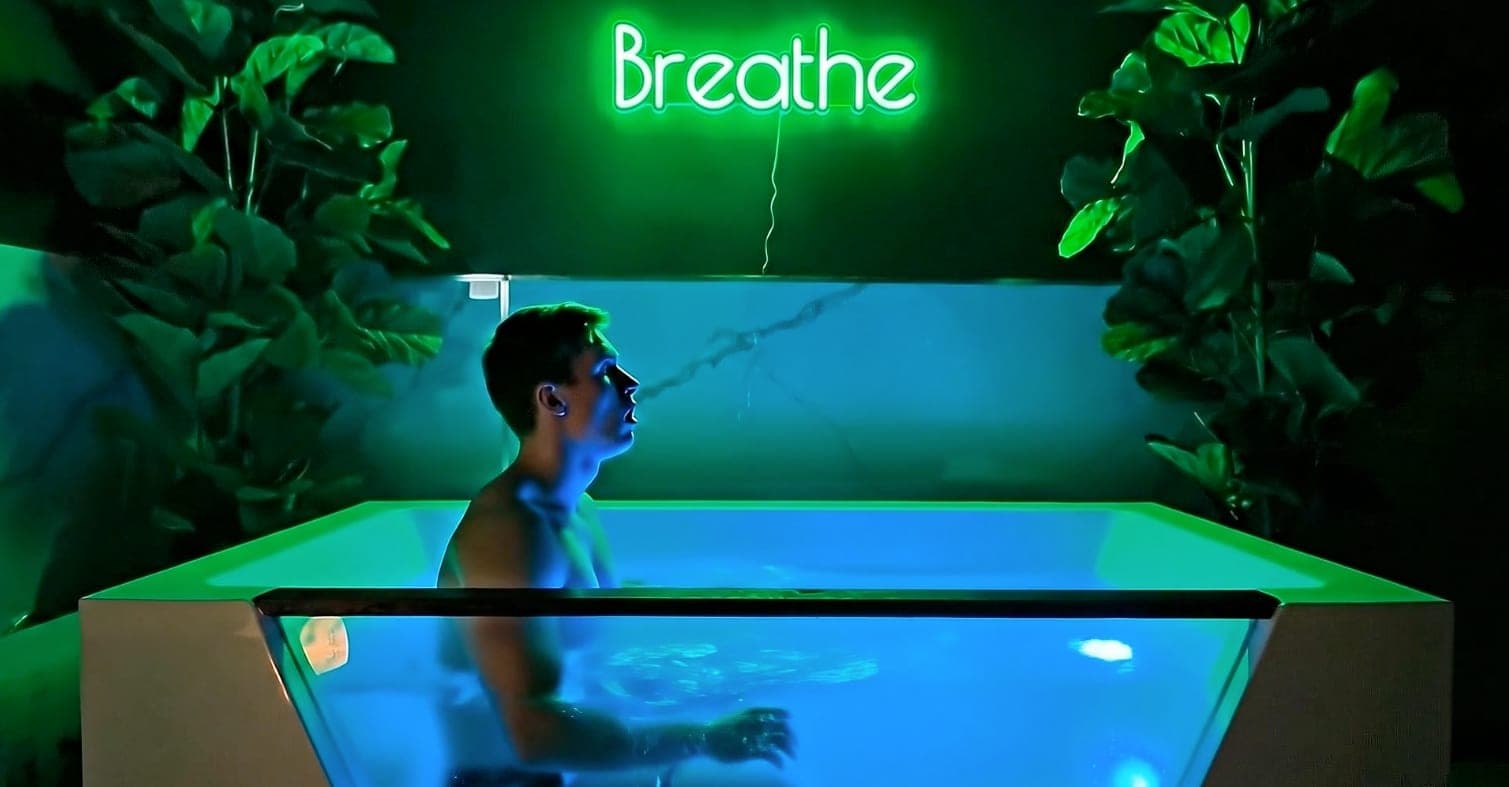
- In the water: pick one point to look at and count slow breaths instead of seconds. Five slow breaths is a good first goal.
- Getting out: towel off, take a few normal breaths and head back to the heat.
New to the cold? Our first-time cold plunge tips walk through your first dip, and our guide to how long to stay in the sauna and cold plunge covers the minutes.
Why a private room makes this easier
It's hard to close your eyes and picture a river when a stranger is waiting for your spot on the bench. In a private suite, nobody's watching, so you can count out loud, breathe as slowly as you like or sit with your eyes shut for a whole round. Set the lights, close the door and take your time. That's what our private sauna suites in San Diego and Temecula are for.
Keep it simple, and keep it safe
- Five minutes is plenty. You don't need the whole routine every time. The slow breath is the core.
- Skip what you don't like. If an image or a step doesn't work for you, drop it.
- No breath games in the water. Never hold your breath or breathe fast and hard in or right before the cold plunge, and stop anything that makes you light-headed.
- Stop if it feels wrong. If anything feels uncomfortable, physically or mentally, open your eyes, sit quietly or get out.
If you're dealing with anxiety, pain or an injury, this routine isn't a substitute for care. Talk to your doctor or a mental health professional.
Questions people ask.
Does visualization really help you relax?
Research suggests it can. In a randomized study of 60 students, guided imagery increased relaxation compared with a control group. It's not a treatment for any condition, just a simple way to settle your mind.
What's a good breathing pattern for the sauna?
Try in through your nose for four counts and out for six. Research links slow breathing with long exhales to feeling calmer. If it feels tight in the heat, shorten both counts.
Is breathwork safe in a cold plunge?
Slow breathing with long exhales, yes. Never hold your breath or breathe rapidly in or right before cold water, and stop anything that makes you dizzy or light-headed.
How long should I practice visualization in the sauna?
A few minutes is enough. In one study, just five minutes a day of exhale-focused breathing improved mood over a month.
Do I need an app or a guided recording?
No. You only need your breath and a few minutes. If you like a guided recording, listen before you go in rather than taking your phone into the heat.
Sources
- Zaccaro A, et al. How breath-control can change your life: a systematic review on psycho-physiological correlates of slow breathing. Frontiers in Human Neuroscience, 2018.
- Balban MY, et al. Brief structured respiration practices enhance mood and reduce physiological arousal. Cell Reports Medicine, 2023.
- Toussaint L, et al. Effectiveness of progressive muscle relaxation, deep breathing, and guided imagery in promoting psychological and physiological states of relaxation. Evidence-Based Complementary and Alternative Medicine, 2021.
- Laukkanen T, et al. Recovery from sauna bathing favorably modulates cardiac autonomic nervous system. Complementary Therapies in Medicine, 2019.
- Tipton MJ, et al. Cold water immersion: kill or cure? Experimental Physiology, 2017.